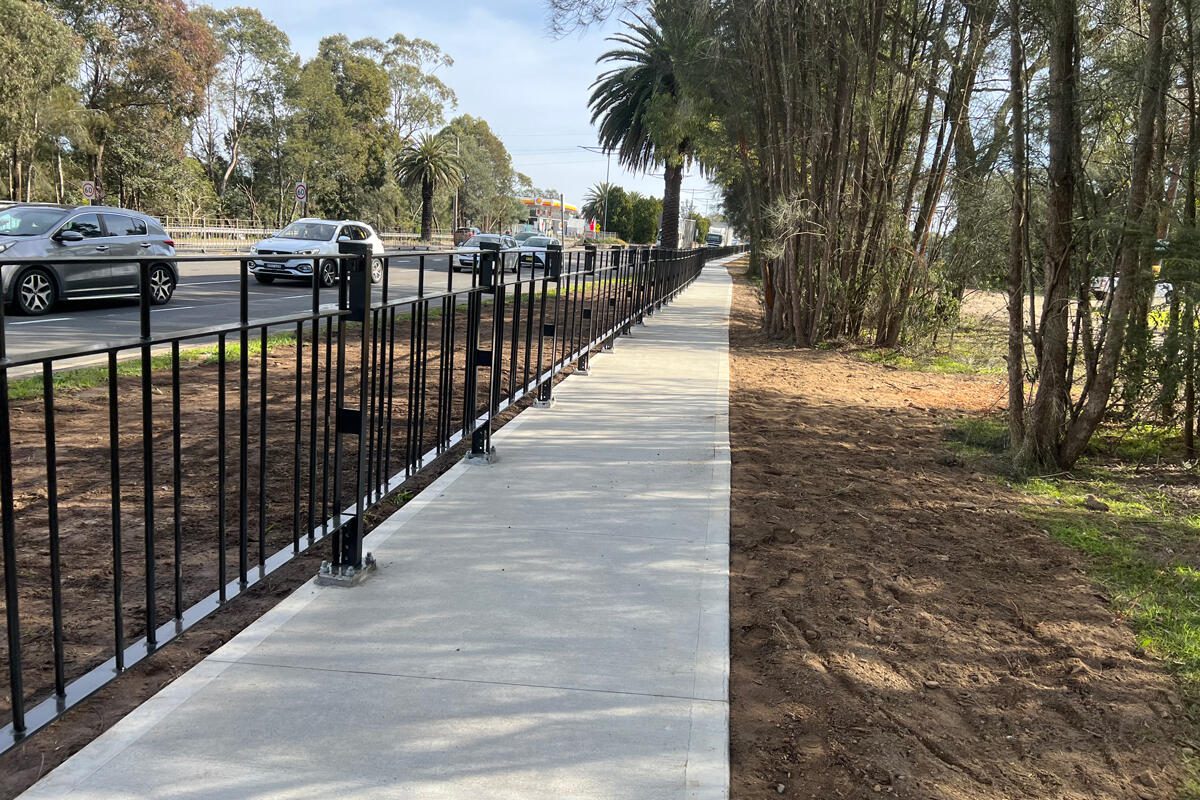
Improving Pedestrian Safety at Blaxland
Pedestrian safety on high-traffic road corridors is one of the most critical — and often underestimated — aspects of transport infrastructure. At Blaxland, along the Great Western Highway, this challenge is front and centre. High vehicle volumes, limited verge space, and regular pedestrian movement create a risk profile that demands more than painted lines or signage.
That’s where properly designed and compliant pedestrian fencing plays a vital role.
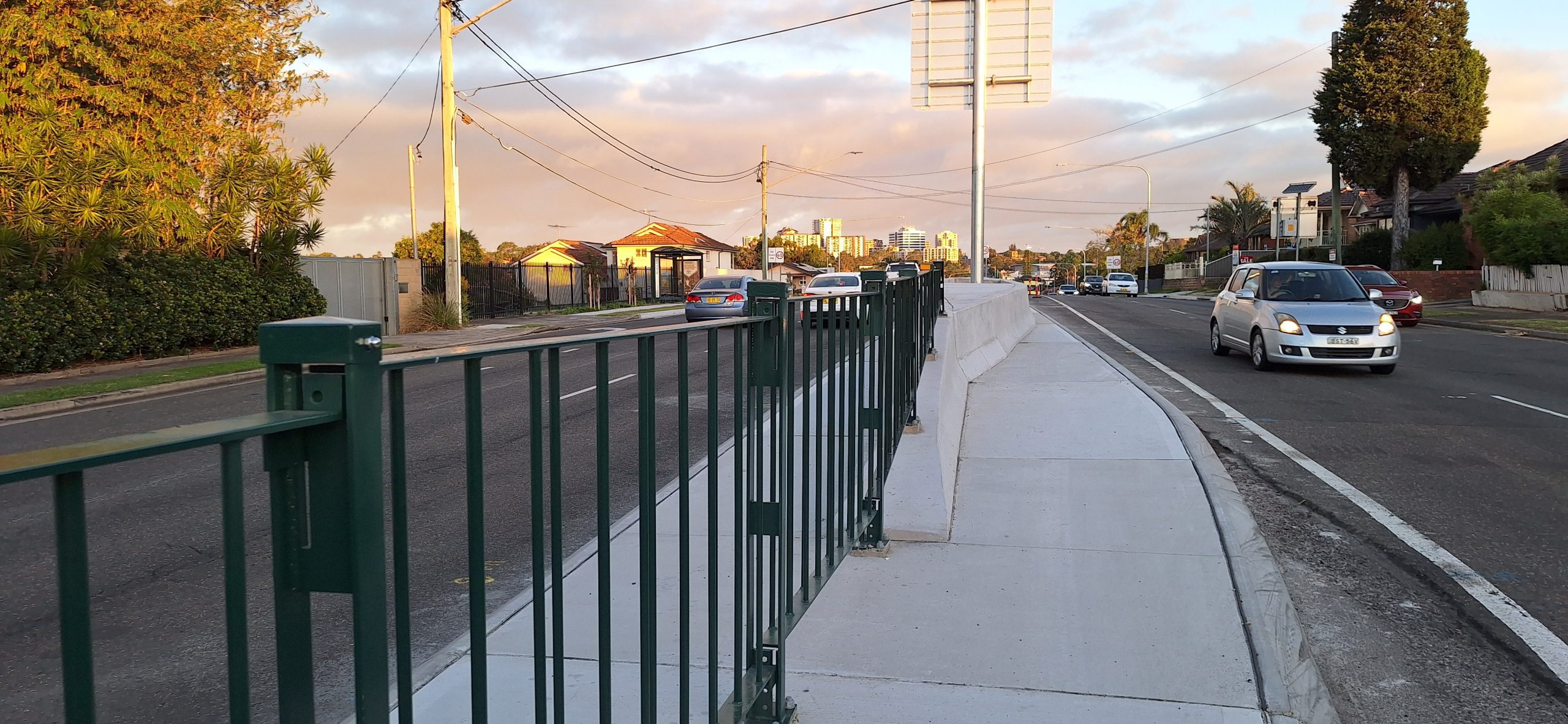
Guard-R Group is proud to have supplied Street-Guard® TfNSW RMS Pedestrian Fencing for the Blaxland pedestrian fencing project, delivered as part of a safety upgrade led by Transport for NSW.
Why pedestrian fencing matters on arterial roads
On busy roads like the Great Western Highway, the biggest risk to pedestrians is unpredictable crossing behaviour. Pedestrian fencing is not about restricting movement — it’s about guiding it safely.
When designed and installed correctly, pedestrian fencing:
Channels foot traffic toward designated crossing points
Reduces the likelihood of mid-block and unsafe crossings
Creates clearer separation between vehicles and pedestrians
Improves driver expectation and reaction time
In short, it adds order and predictability to complex road environments — a key principle of road safety engineering.
The Blaxland project at a glance
The Blaxland works form part of a broader safety and accessibility upgrade and include:
Installation of new pedestrian fencing along the highway edge
Footpath widening to improve pedestrian comfort and accessibility
Integration with existing road and verge constraints
The fencing component plays a critical role in ensuring the upgraded footpath delivers genuine safety benefits, not just improved amenity.
Why Street-Guard®
Street-Guard® TfNSW RMS Pedestrian Fencing is purpose-designed for NSW road environments and manufactured to meet Transport for NSW specifications.
Key features include:
TfNSW RMS compliance – designed to meet current technical and approval requirements
Robust construction – suitable for high-exposure, high-impact locations
Consistent detailing – integrates cleanly with footpaths, retaining walls, and urban streetscapes
Proven performance – trusted across local, state, and arterial road projects
Importantly, RMS pedestrian fencing types are not about performance hierarchy — the difference lies primarily in appearance and context suitability. Street-Guard® provides specifiers and designers with confidence that safety objectives are met without compromising visual outcomes.
Designing for real-world behaviour
One of the most valuable lessons in pedestrian safety design is that people will always seek the most direct route. Infrastructure must respond to this reality.
At Blaxland, the fencing layout works with pedestrian behaviour — subtly guiding movement toward safer crossing opportunities rather than relying on enforcement or signage alone. This approach reduces conflict, lowers risk, and delivers long-term safety benefits that continue well after construction is complete.
Collaboration delivers better outcomes
Projects like this highlight the importance of collaboration between asset owners, designers, contractors, and specialist suppliers. Pedestrian fencing may seem simple, but correct product selection, detailing, and placement make the difference between a compliant outcome and a genuinely safe one.
We’re proud to support projects that prioritise practical safety outcomes and long-term asset performance.
Safer streets, built to last
The Blaxland pedestrian fencing project is a strong example of how targeted infrastructure upgrades can significantly improve safety on busy transport corridors. By combining thoughtful design with compliant, fit-for-purpose products, Transport for NSW continues to deliver safer environments for pedestrians and motorists alike.
Guard-R Group is pleased to have contributed to this outcome through the supply of Street-Guard® TfNSW RMS Pedestrian Fencing — helping turn safety principles into on-the-ground results.