
Protecting Vulnerable Road Users Through Safer Road Design
Pedestrian safety remains one of the most critical considerations in modern road design. While road authorities continue to invest heavily in safer intersections, crossings, speed management and traffic calming measures, one simple piece of infrastructure consistently delivers significant safety benefits — pedestrian fencing.
Pedestrian fencing is not merely a roadside barrier. It is a proven traffic management tool designed to guide pedestrians toward safe crossing locations, reduce unsafe road crossing behaviour, and minimise conflicts between vehicles and vulnerable road users.
As road agencies, designers, auditors and safety practitioners increasingly adopt Safe System principles, pedestrian fencing should be evaluated as a key component of every road upgrade project.
The Primary Purpose of Pedestrian Fencing
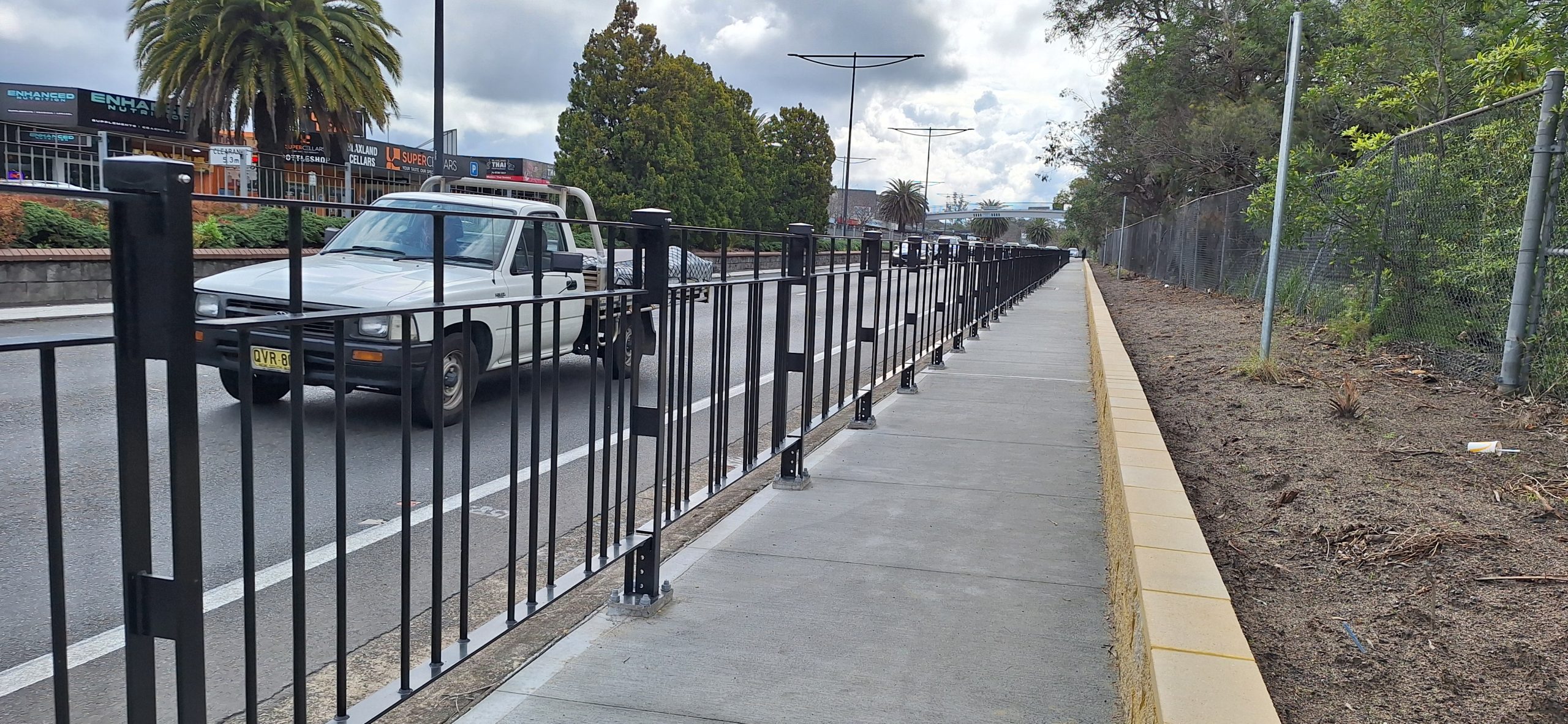
The NSW Technical Direction for the Installation of Pedestrian Fencing on Classified Roads identifies pedestrian fencing as a physical barrier used to direct pedestrians to designated crossing points and prevent uncontrolled access to the roadway.
The objective is straightforward:
- Reduce random and unsafe crossing movements.
- Guide pedestrians to signalised crossings and refuge islands.
- Prevent inadvertent entry into traffic lanes.
- Improve safety outcomes for both pedestrians and motorists.
- Support safer operation of busy road corridors.
By influencing pedestrian behaviour, fencing helps create a more predictable road environment, reducing the likelihood of serious vehicle-pedestrian crashes.
A Proven Safety Treatment for High-Risk Locations
Pedestrian fencing is particularly effective where:
- There is a history of pedestrian crashes.
- Pedestrians regularly cross outside designated crossing facilities.
- Schools, transport hubs, shopping centres or community facilities generate significant pedestrian activity.
- Higher-speed arterial roads carry substantial traffic volumes.
- Vulnerable road users are present, including children, elderly pedestrians and mobility-impaired users.
In these environments, fencing acts as a physical and visual cue, encouraging safer crossing decisions and reducing exposure to traffic hazards.
Crash-Tested Design for Roadside Safety
Unlike conventional decorative fencing, approved pedestrian fencing systems have been specifically designed and tested for use in roadside environments.
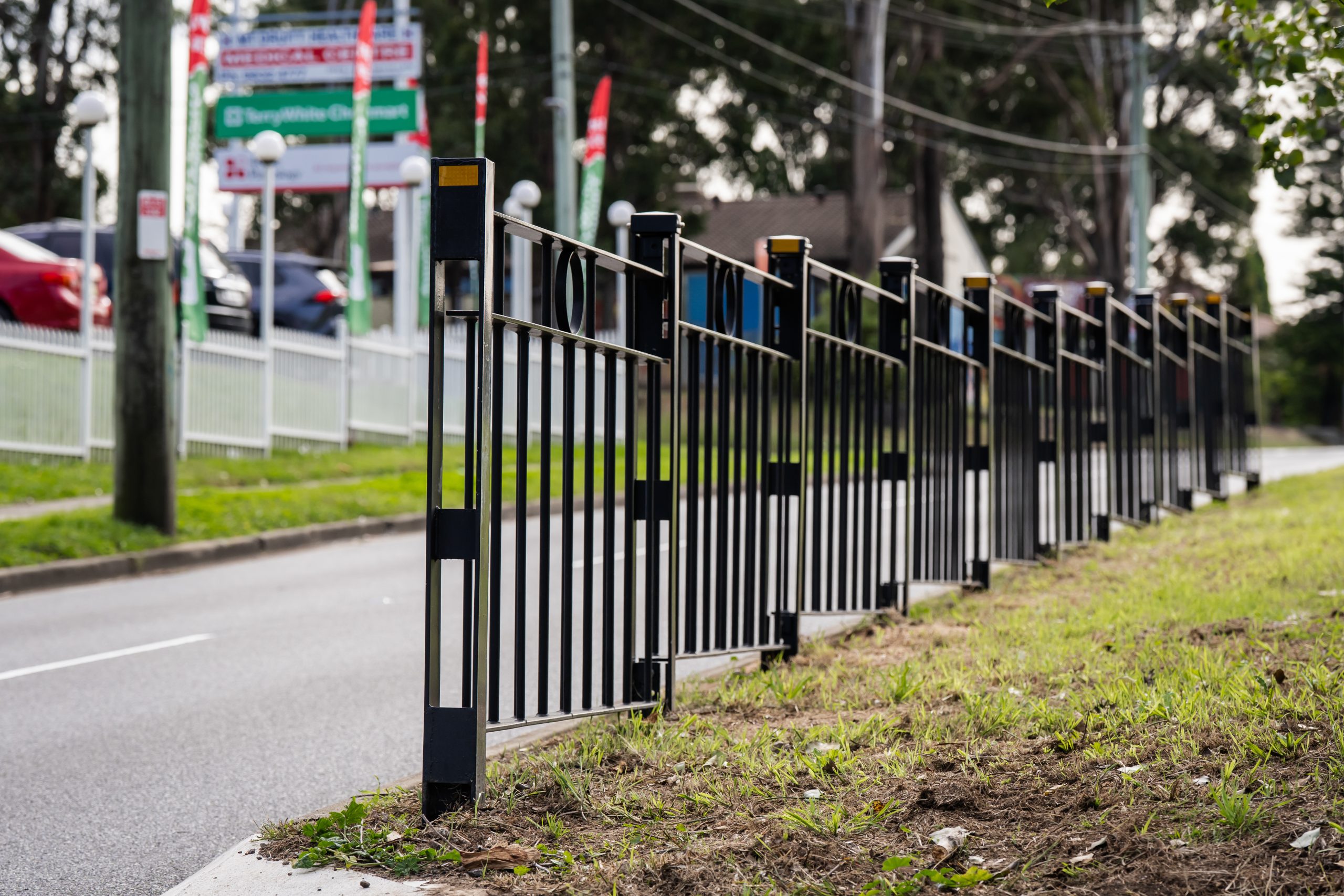
The NSW Technical Direction notes that the Pedestrian Fence has undergone crash testing and is suitable for installation on roads with posted speed limits of up to 80 km/h. Importantly, the fence incorporates a unique safety feature whereby the panels are designed to collapse as an entire section when impacted by a vehicle, rather than breaking into numerous individual components.
The Pedestrian Fence comprises panels that are designed to collapse as a whole panel when impacted, to minimise the detachment of individual elements.
This design philosophy delivers several important safety benefits:
- Reduces the likelihood of fence components becoming dangerous projectiles.
- Minimises debris scatter following an impact.
- Reduces secondary hazards to pedestrians and motorists.
- Provides more predictable crash performance.
- Improves roadside safety outcomes compared to conventional fencing systems.
For road designers, traffic engineers and road safety auditors, this crash-tested behaviour provides confidence that the fencing system has been engineered specifically for roadside applications and vulnerable road user protection rather than simply acting as a visual barrier.
Designed with Safety Performance in Mind
Modern pedestrian fencing systems are engineered specifically for roadside environments.
The NSW-approved pedestrian fencing design incorporates several important safety features:
Controlled Impact Behaviour
Unlike conventional decorative fencing, approved pedestrian fencing systems have been crash-tested and assessed for installation on roads with speed limits up to 80 km/h.
The fencing panels are designed to collapse as complete sections when impacted, reducing the likelihood of individual components breaking away and becoming hazardous debris.
Improved Visibility
A staggered baluster arrangement allows pedestrians and motorists approaching from opposite sides of the fence to maintain visibility of one another.
This is a critical design feature that improves awareness and supports safer decision-making near crossings, intersections and pedestrian activity zones.
Positive Pedestrian Guidance
The most effective safety benefit comes from behavioural control.
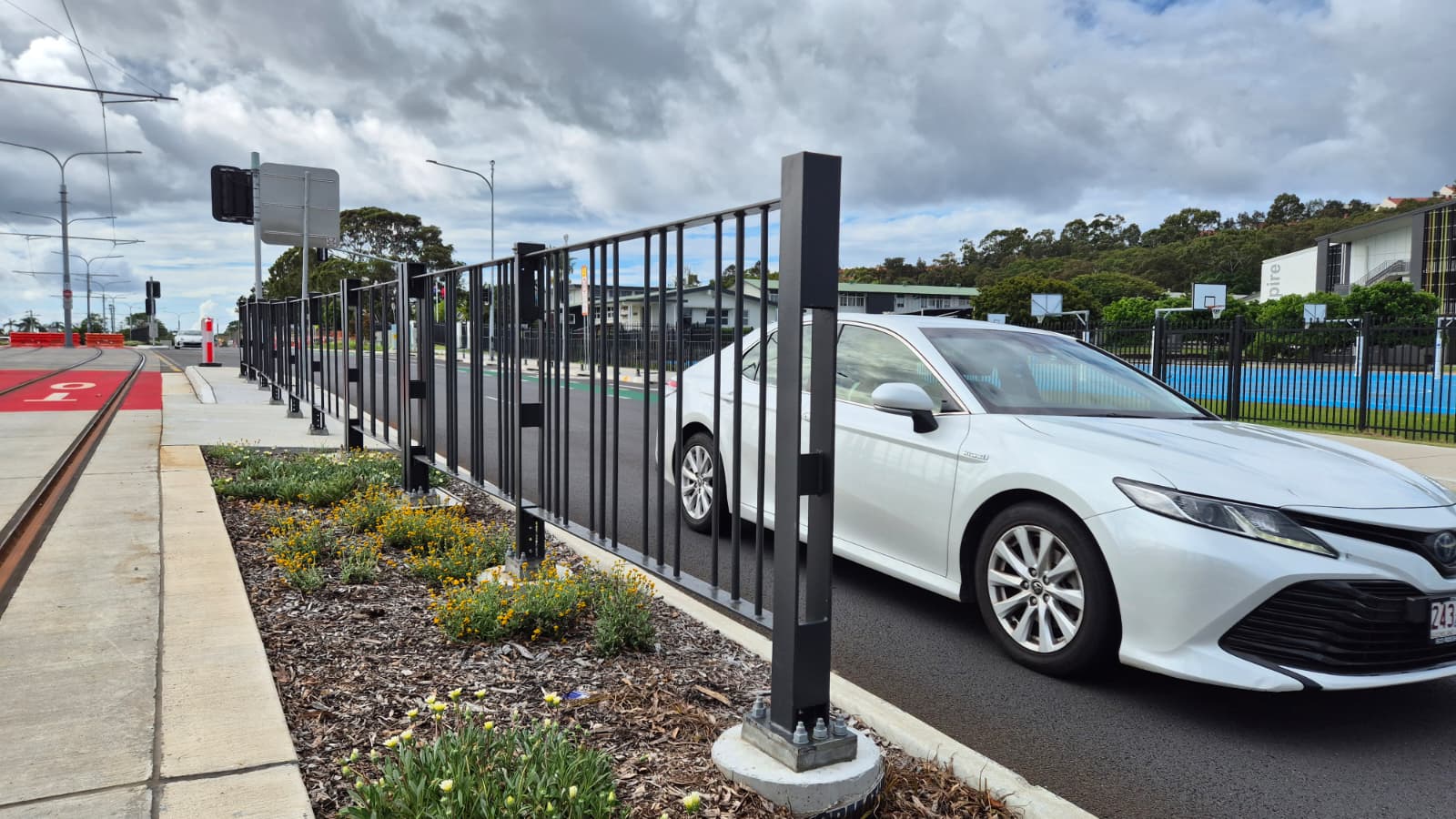
Pedestrian fencing physically discourages unsafe mid-block crossings and channels users toward designated crossing points where traffic controls, refuge islands or signal protection exist.
Why Road Designers Should Consider Pedestrian Fencing Early
Too often pedestrian fencing is considered late in the design process or added only after safety issues emerge.
A better approach is to evaluate pedestrian desire lines, crossing behaviour and vulnerable user movements during concept design.
By integrating pedestrian fencing early, designers can:
- Improve overall network safety.
- Reduce future crash risk.
- Strengthen road safety audit outcomes.
- Better align with Safe System objectives.
- Enhance protection around schools, transport interchanges and community facilities.
Early consideration also allows fencing to be coordinated with footpaths, crossings, medians, traffic signals and roadside infrastructure for a more effective outcome.
The Role of Road Safety Auditors
Road safety auditors play a critical role in identifying locations where pedestrian behaviour may create unacceptable risk.
When reviewing road upgrades, auditors should consider:
- Existing pedestrian crash history.
- Desire lines that encourage unsafe crossings.
- Pedestrian activity generators.
- Crossing facility spacing.
- Vulnerable user movements.
- Opportunities to guide pedestrians to safer crossing locations.
Where uncontrolled pedestrian movements are identified, pedestrian fencing should be evaluated as part of the recommended treatment strategy.
Pedestrian Fencing Is More Than a Barrier
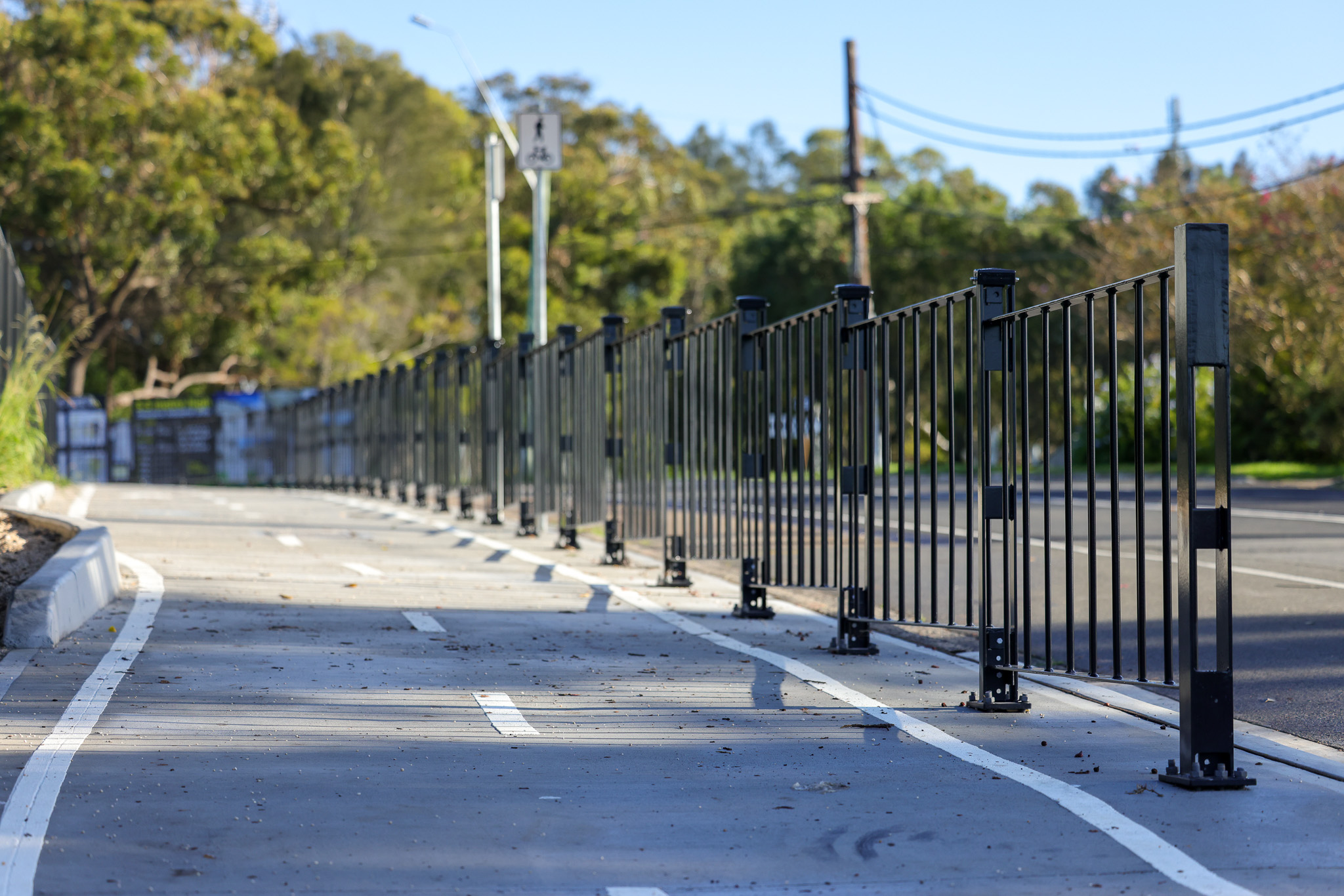
Modern pedestrian fencing is not simply an access control measure. It is a purpose-designed roadside safety device that guides pedestrian behaviour, improves visibility between motorists and pedestrians, and incorporates crash-tested features such as whole-panel collapse technology to minimise debris hazards following vehicle impacts. These characteristics make pedestrian fencing an important consideration for every road upgrade where pedestrian safety is a priority.
Build Safer, More Reliable Carparks – On Time & On Spec
Explore car carpark solutions on our website or book a no-obligation consultation to discuss how Guard-R can help you design safer, compliant carpark environments that stand the test of time.