Project Details
| Location | Broadbeach South to Burleigh Heads, Queensland |
| Client | Queensland Department of Transport and Main Roads |
| Funding Partners | Australian Government, Queensland Government and City of Gold Coast |
| Delivery Consortium | GoldlinQ |
| Design and Construction Contractor | John Holland |
| Design and Infrastructure Consultant | AECOM |
| Pedestrian Fencing Installer | My Fence Australia |
| Pedestrian Fencing Supplier | Guard-R Group |
| Product Supplied | Street-Guard® Type 1 Pedestrian Fencing |
| Project Value | $1.549 billion |
Expanding the Gold Coast Light Rail Network
Gold Coast Light Rail was developed as a staged transport network to support population growth and improve public transport connections across the city.
Stages 1 and 2 established a 20.3-kilometre network between Helensvale and Broadbeach South. Stage 3 extends the system further south through Mermaid Beach, Miami and Burleigh Heads.
The extension includes:
- 6.7 kilometres of dual light rail track
- eight new light rail stations
- five additional trams
- expanded depot and stabling facilities
- new bus and light rail connections at Miami and Burleigh Heads
- upgraded signalised intersections
- new signalised pedestrian crossings
- upgraded pedestrian and cycling infrastructure.
Two traffic lanes are generally retained on either side of the light rail tracks along the Gold Coast Highway. The estimated tram journey between Broadbeach South and Burleigh Heads is approximately 16 to 17 minutes.
An Urban Transport Corridor
Stage 3 is being delivered through an established urban corridor containing major roads, residential neighbourhoods, businesses, visitor accommodation and heavily used pedestrian areas.
Unlike a greenfield rail project, the light rail extension must integrate with existing traffic lanes, intersections, footpaths, cycle routes and access points along the Gold Coast Highway.
This makes pedestrian movement an important part of the corridor design. People must be guided between footpaths, stations, bus connections and designated road or rail crossing points while remaining separated from operational transport areas.
Pedestrian infrastructure is therefore incorporated throughout the project alongside station platforms, accessible pathways, traffic signals and formal crossing facilities.
The Role of Pedestrian Fencing
Pedestrian fencing is used on road and public transport projects to help define where people should walk and cross.
It does not perform the same function as a vehicle crash barrier. Its primary purpose is pedestrian guidance and separation.
Along a light rail corridor, pedestrian fencing may be used to:
- guide people towards designated crossings
- discourage uncontrolled crossing movements
- define the edge of pedestrian paths
- separate pedestrian areas from traffic or operational rail corridors
- support orderly movement near stations and intersections
- improve the visibility and definition of transport boundaries.
These functions are particularly relevant where tram tracks operate through the centre of an active road corridor and pedestrians must move between stations, footpaths and adjoining precincts.
The Gold Coast Light Rail Stage 3 works include new signalised crossings and accessible pedestrian pathways near stations and transport connections.
Street-Guard® Type 1 Pedestrian Fencing
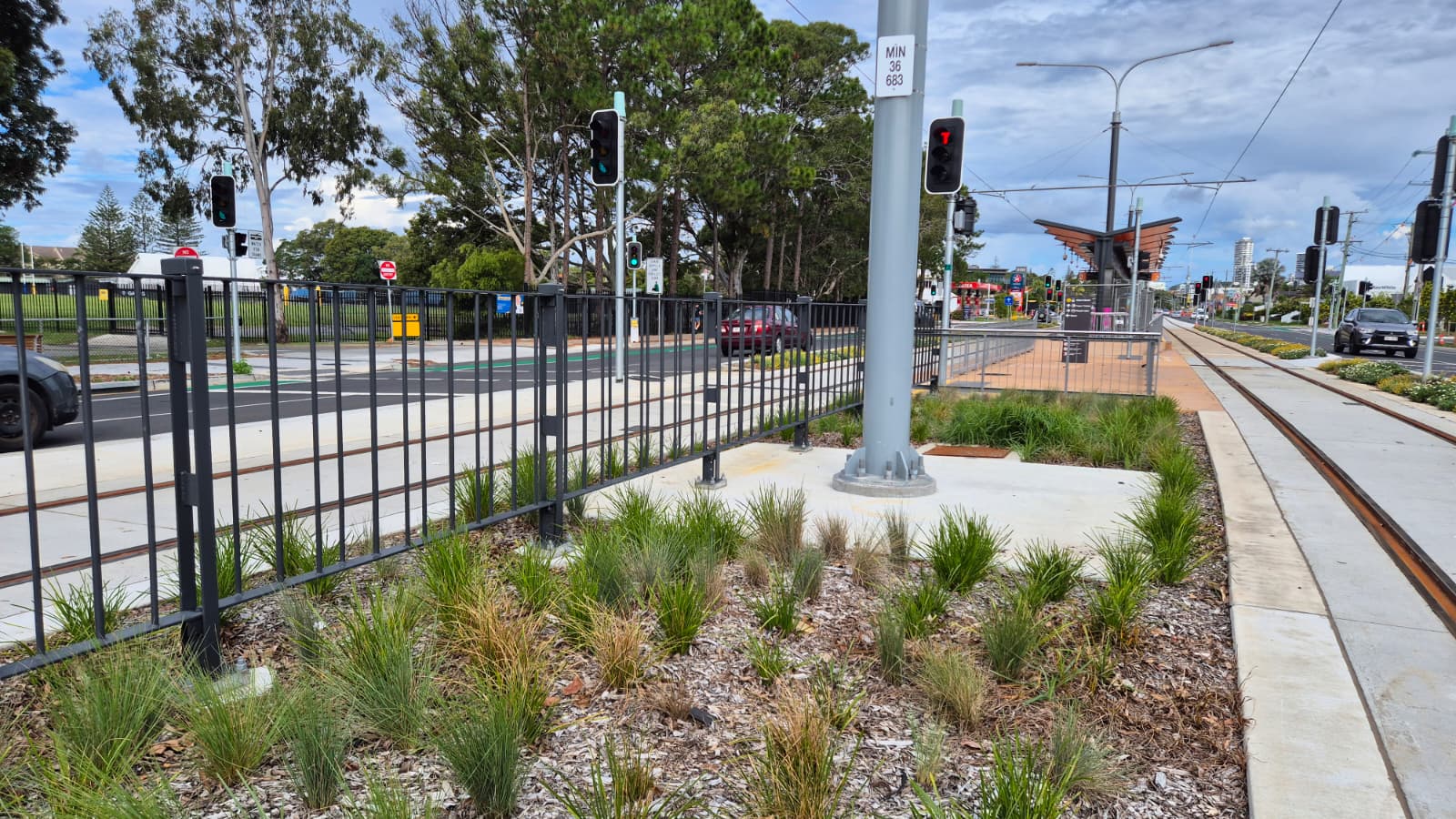
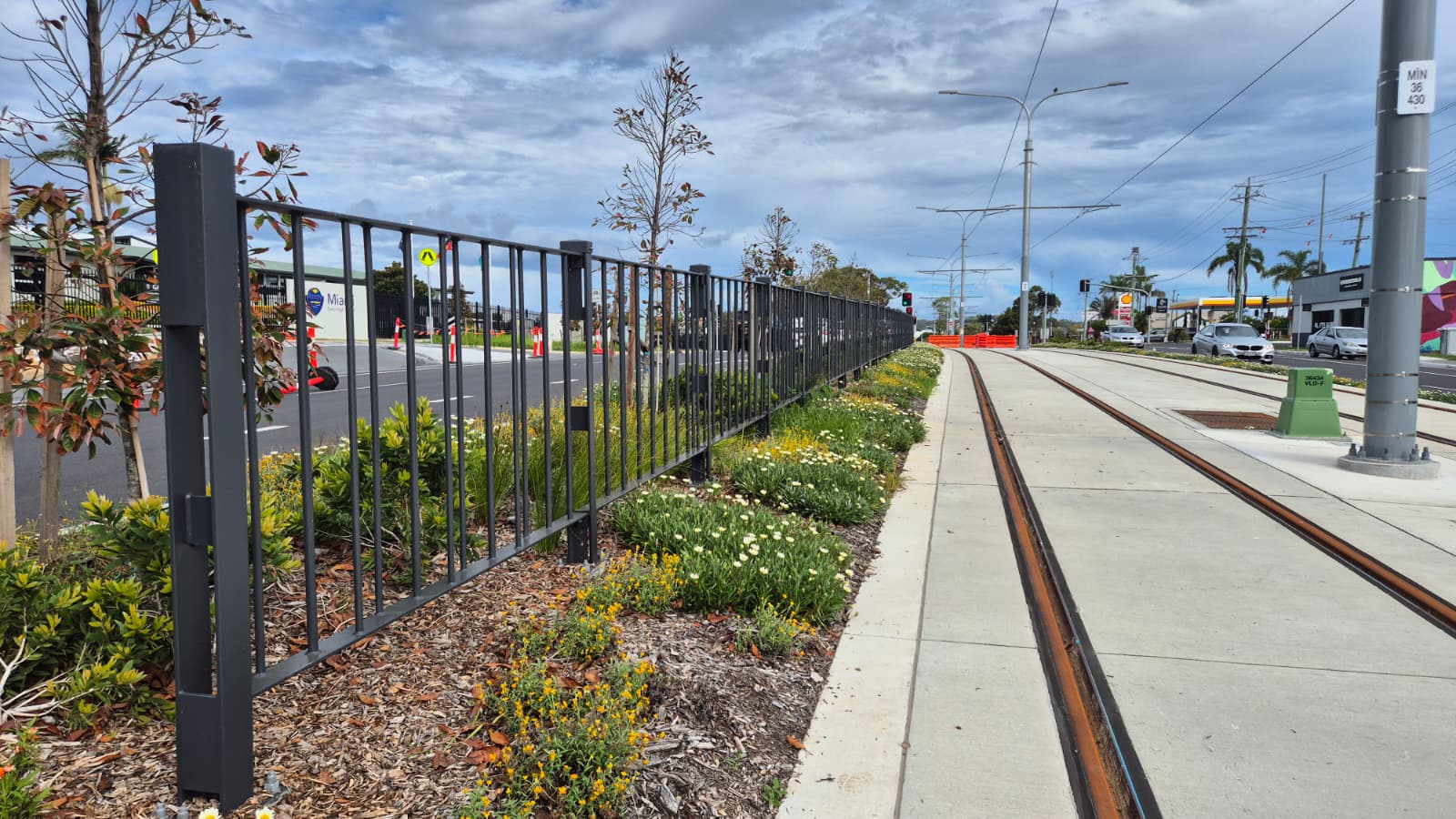
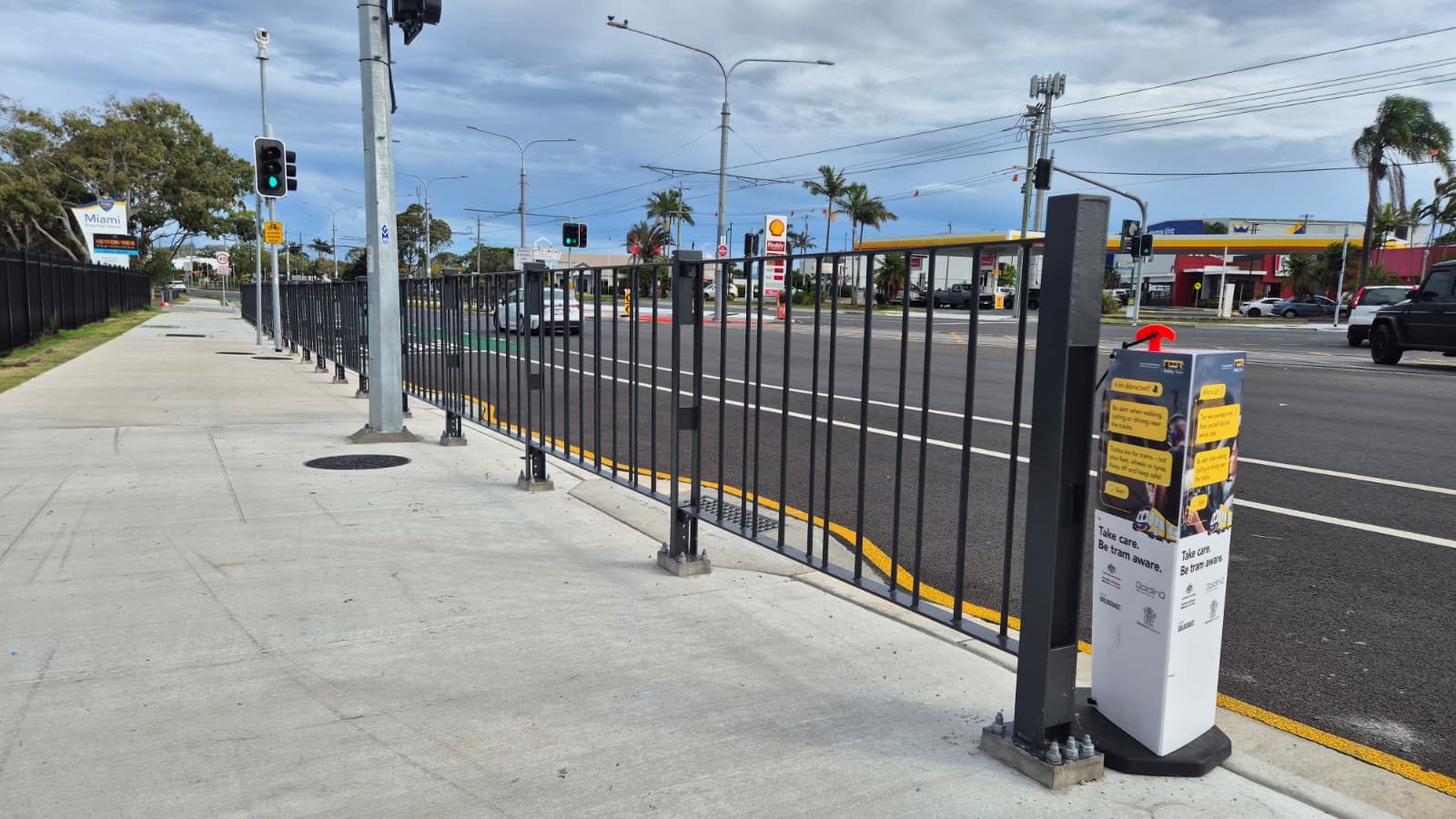
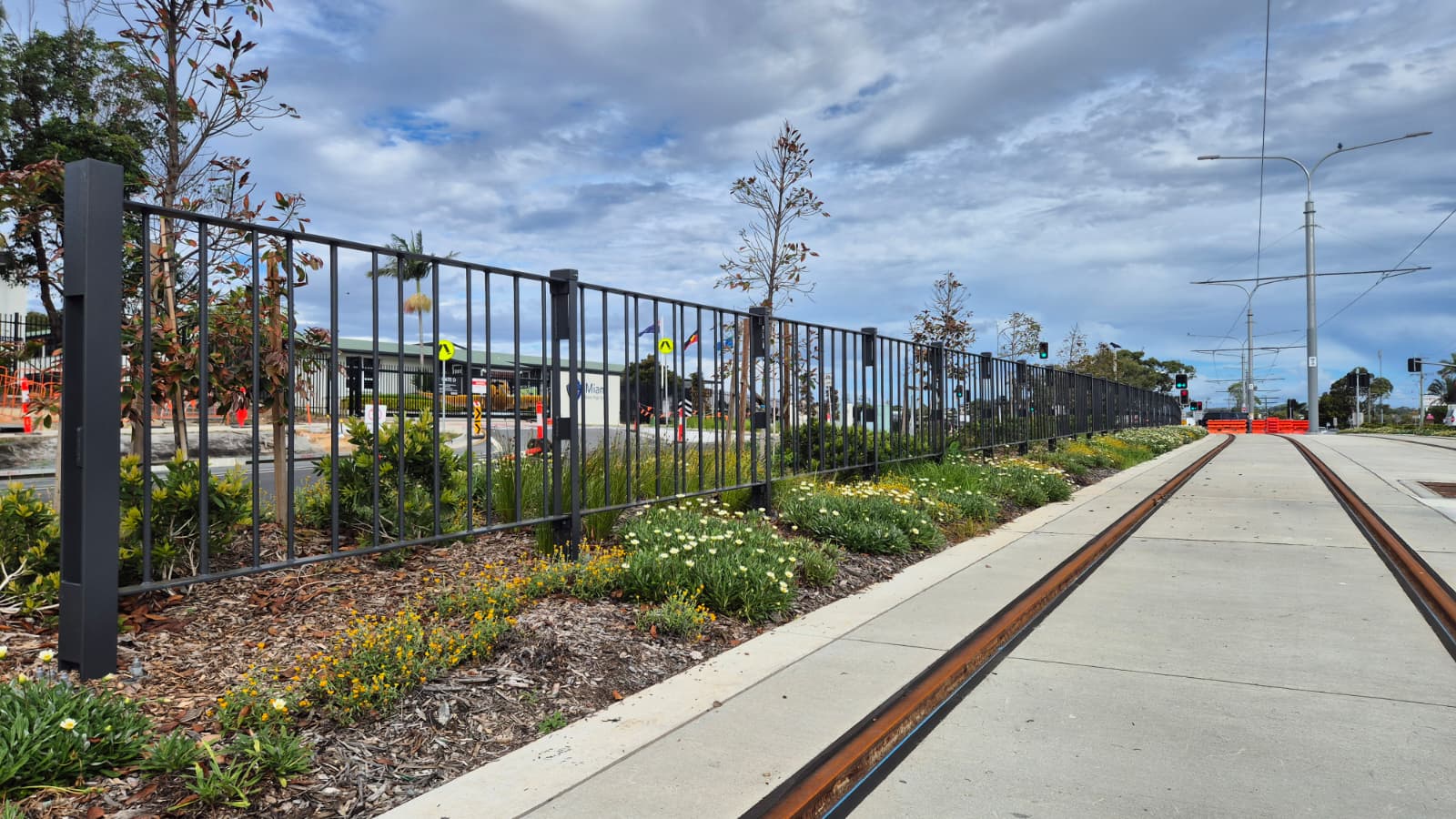
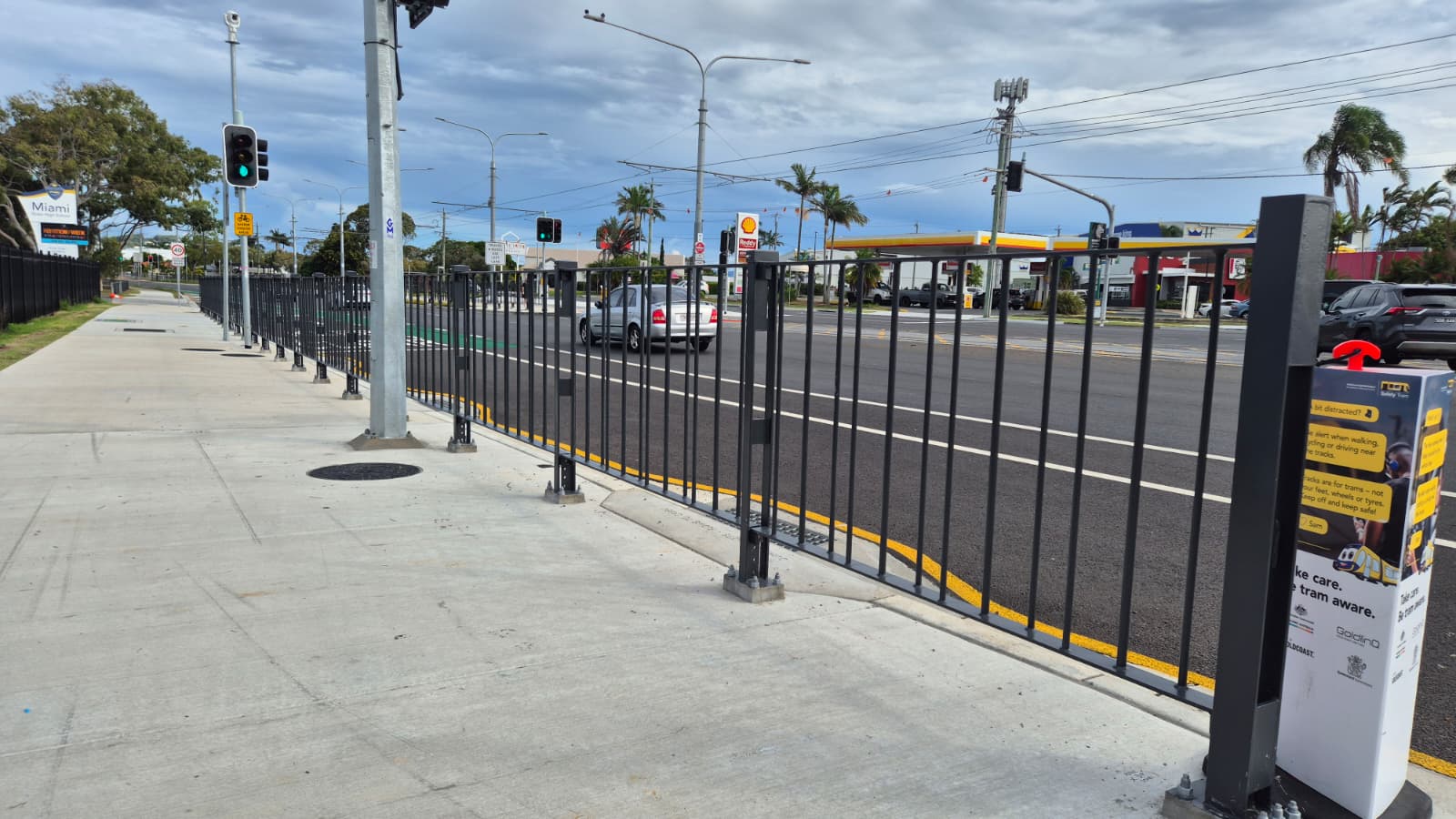
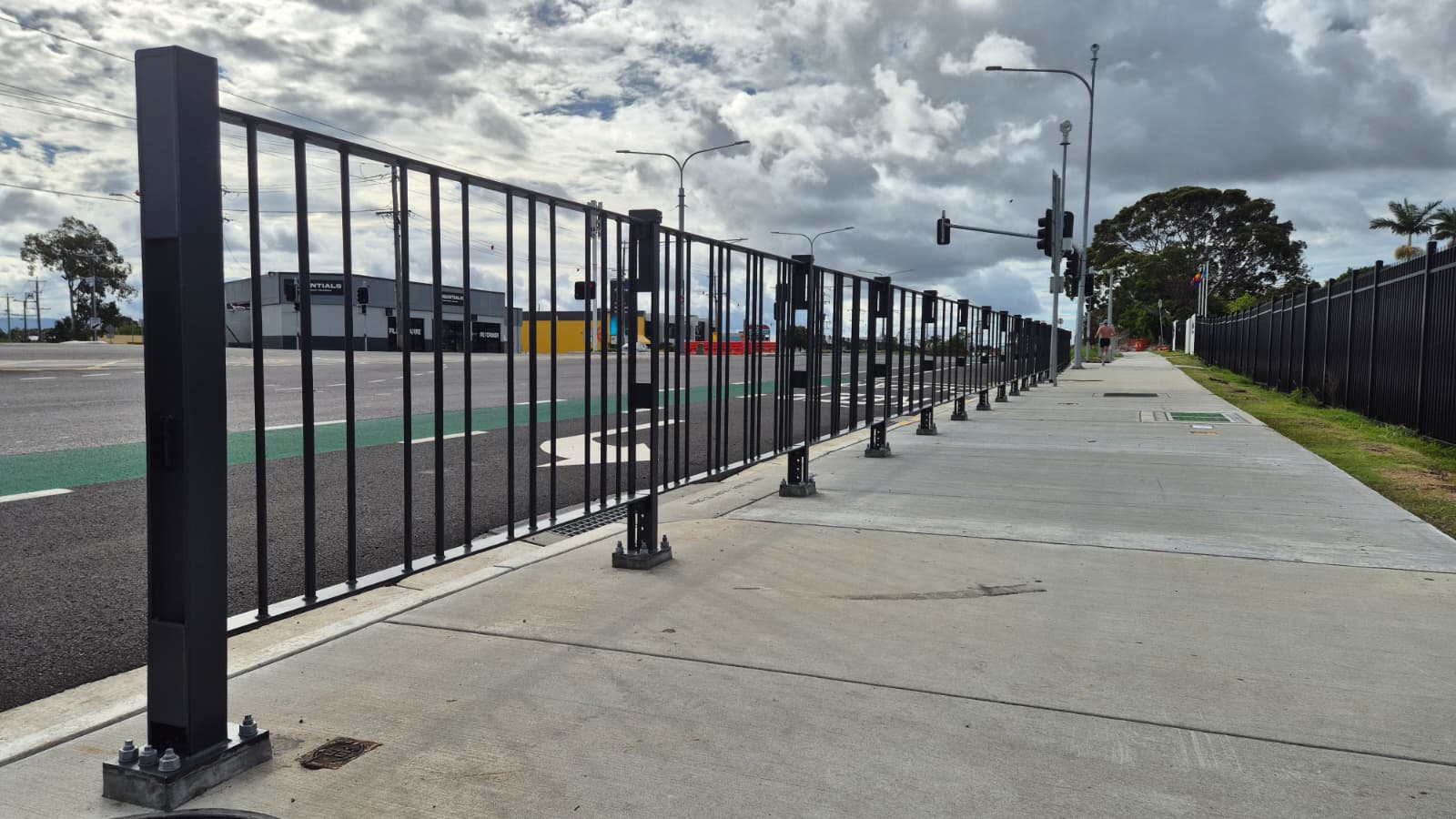
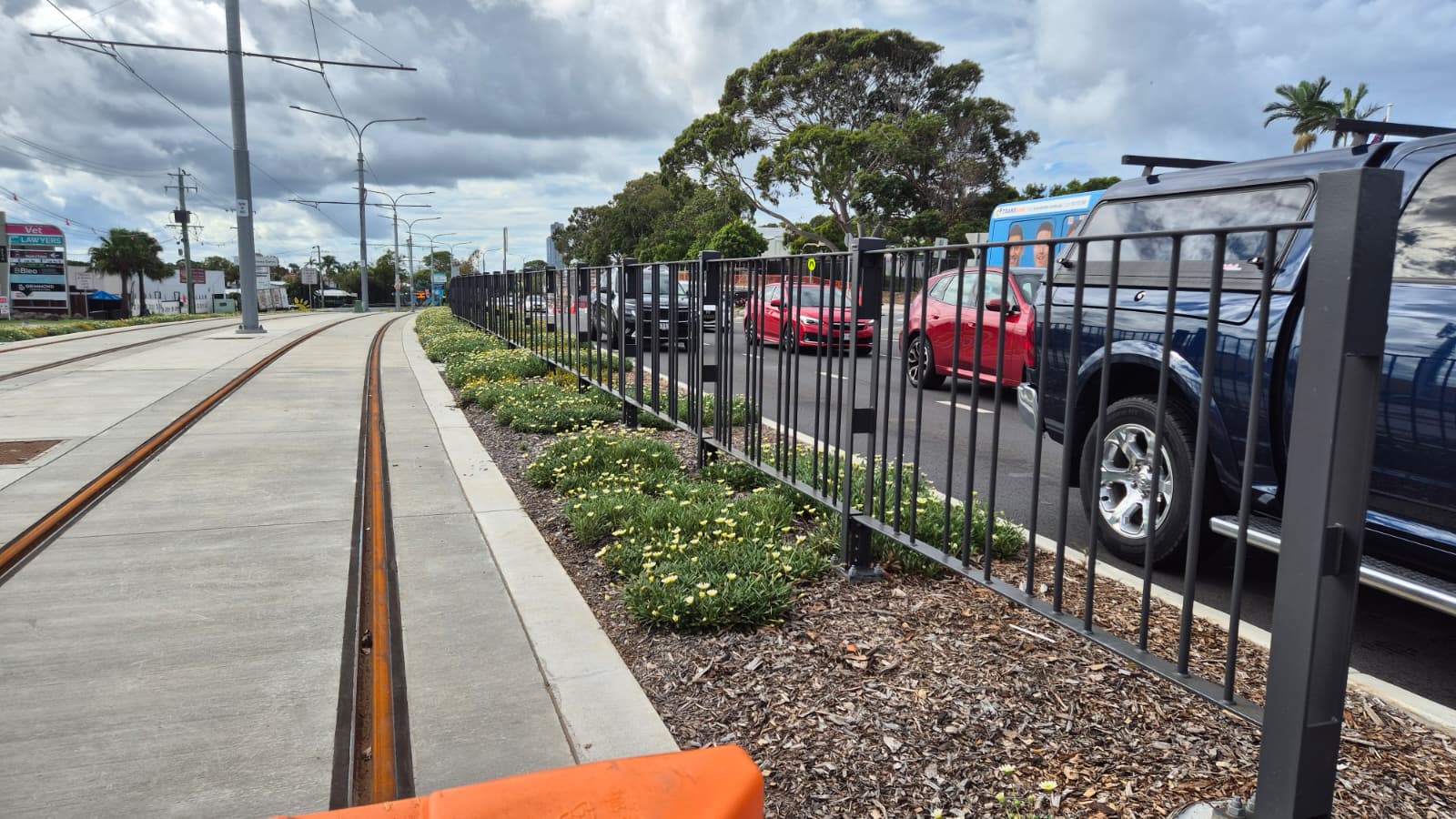
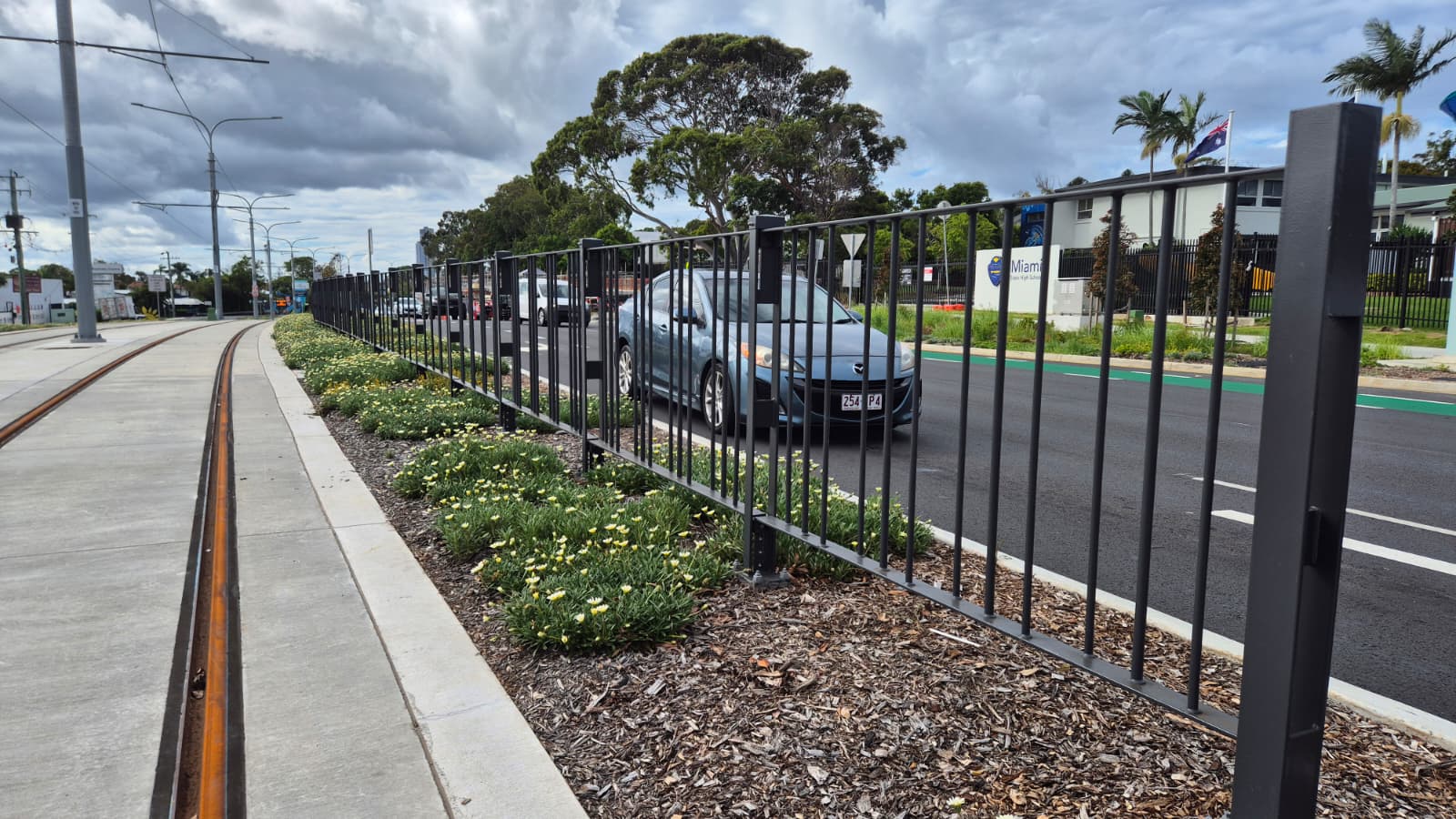
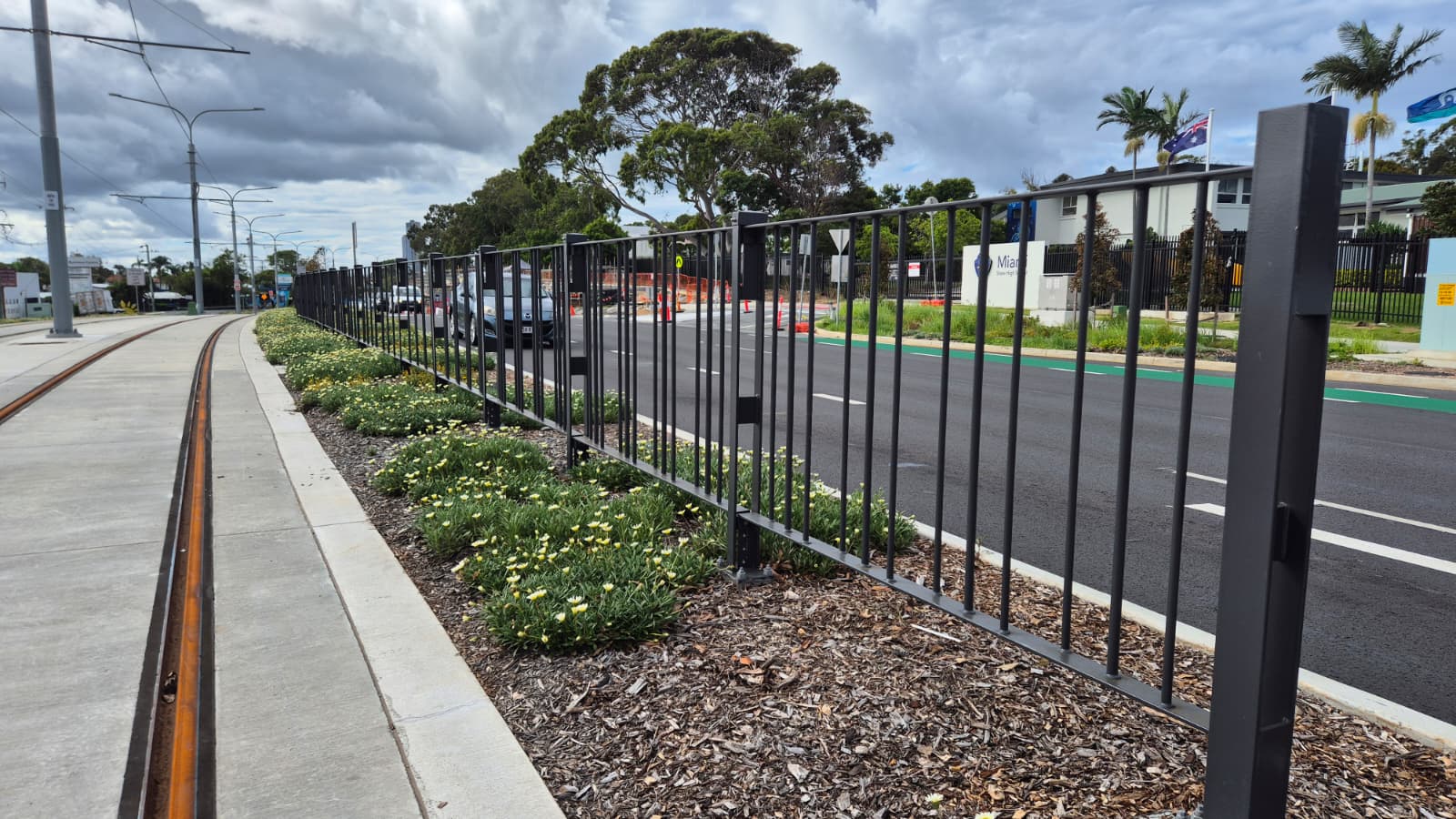
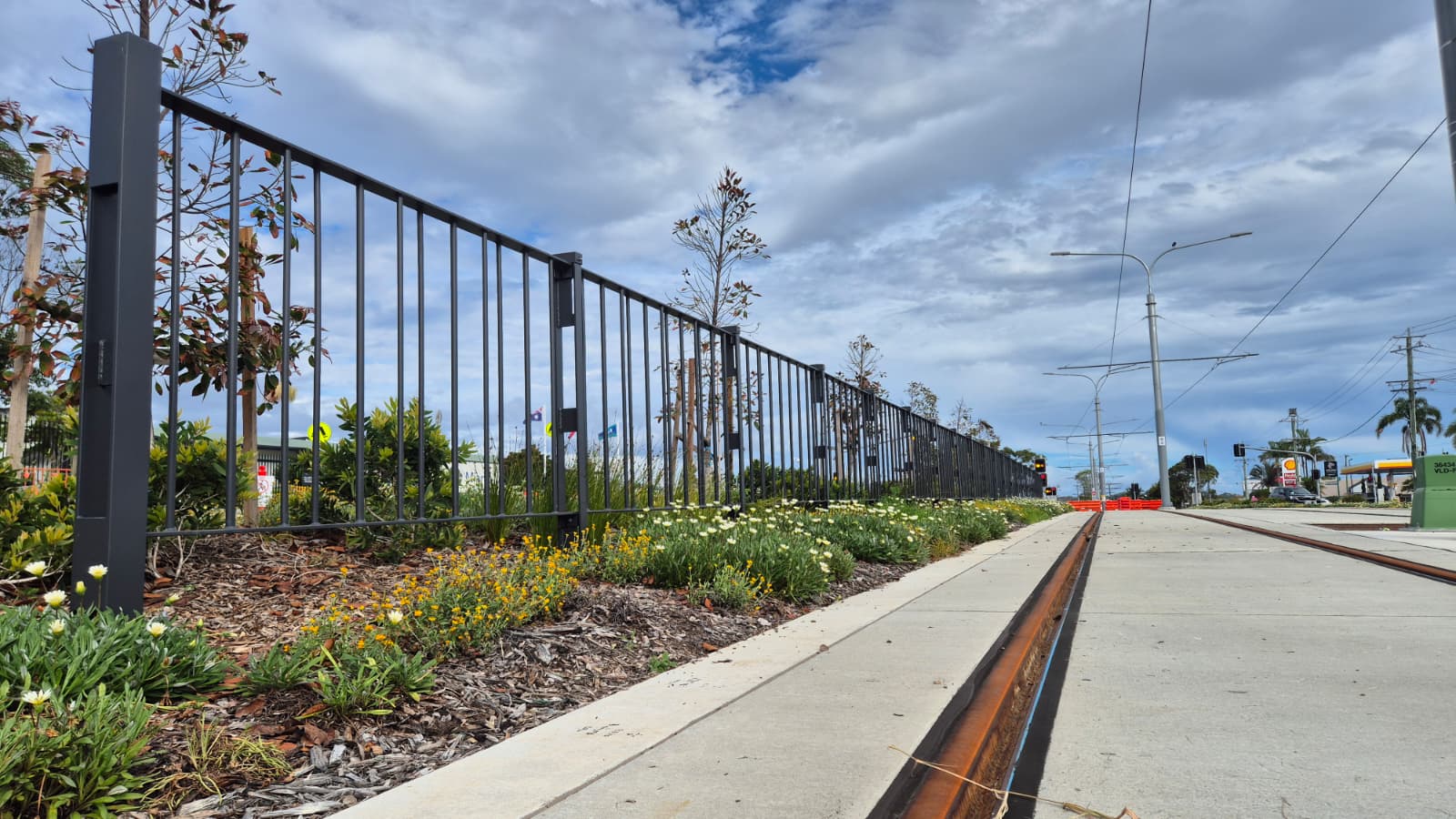
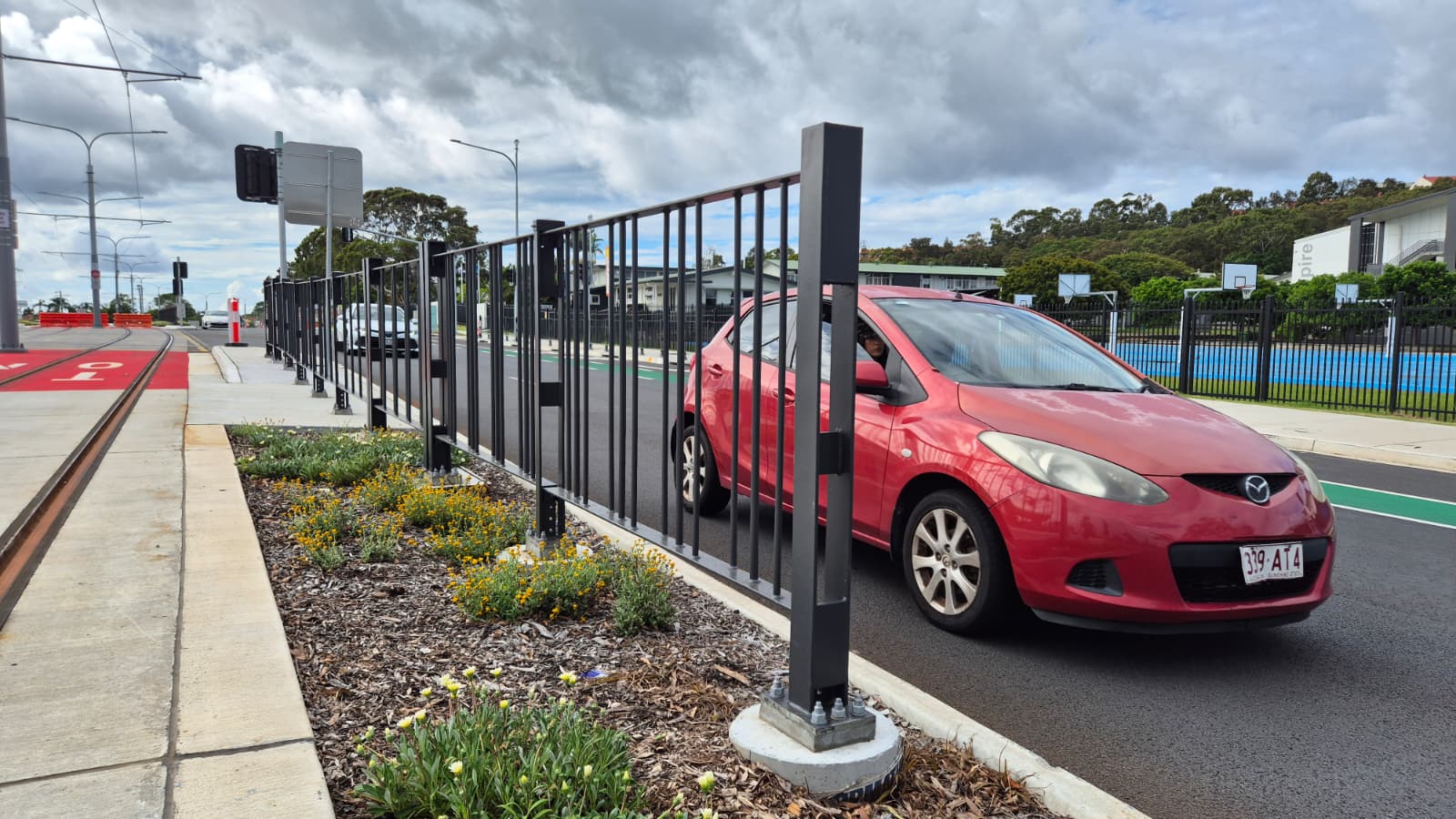
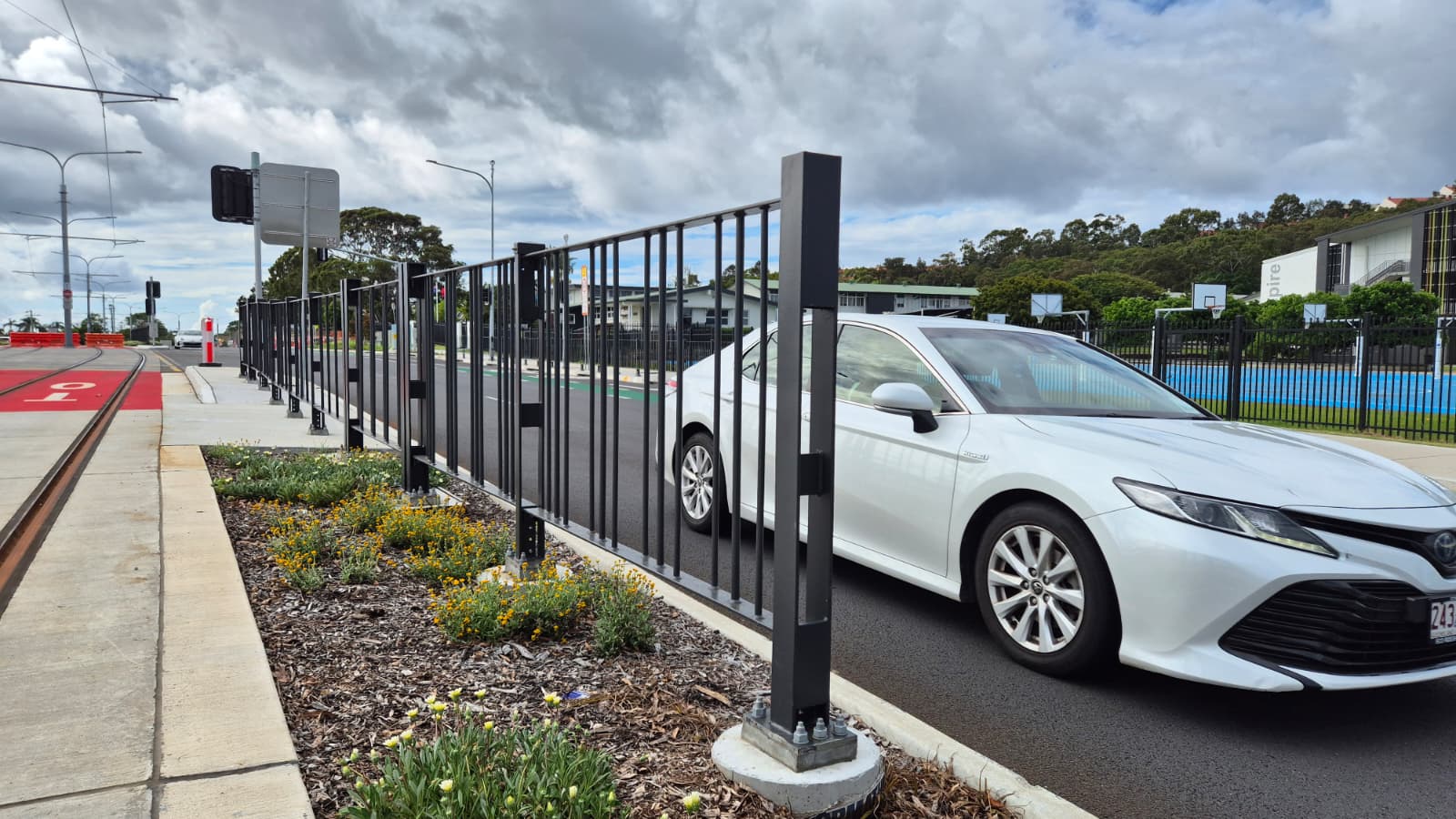
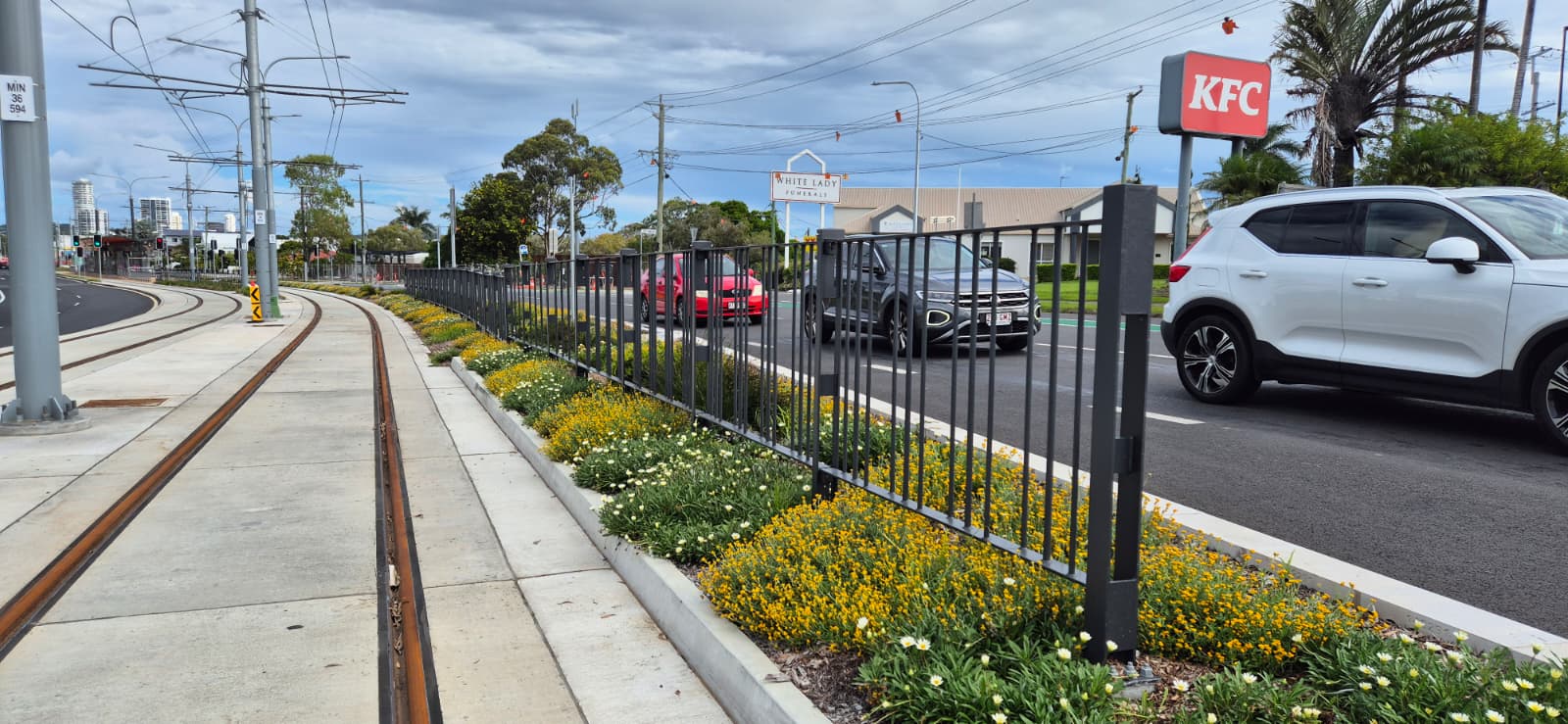
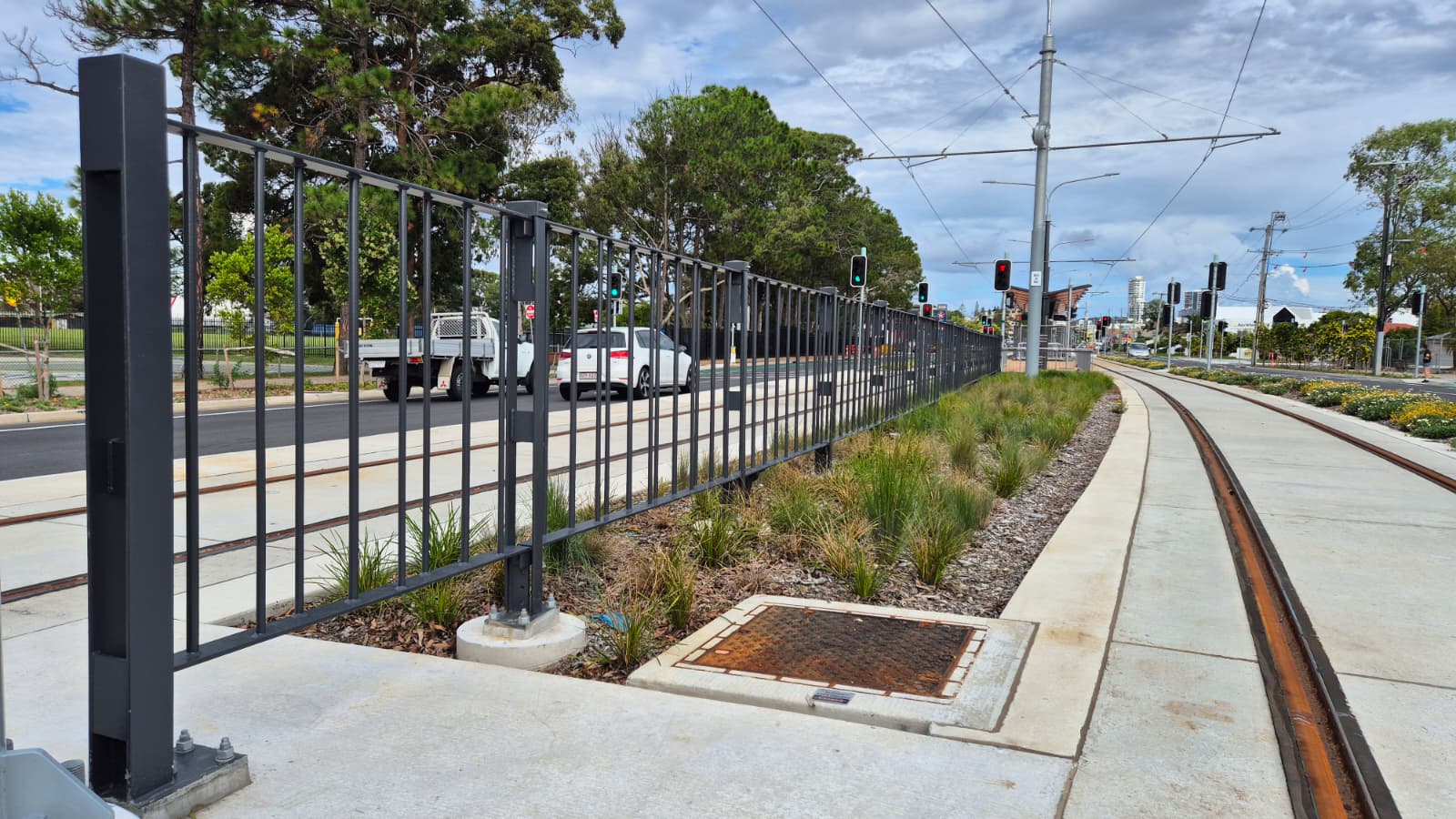
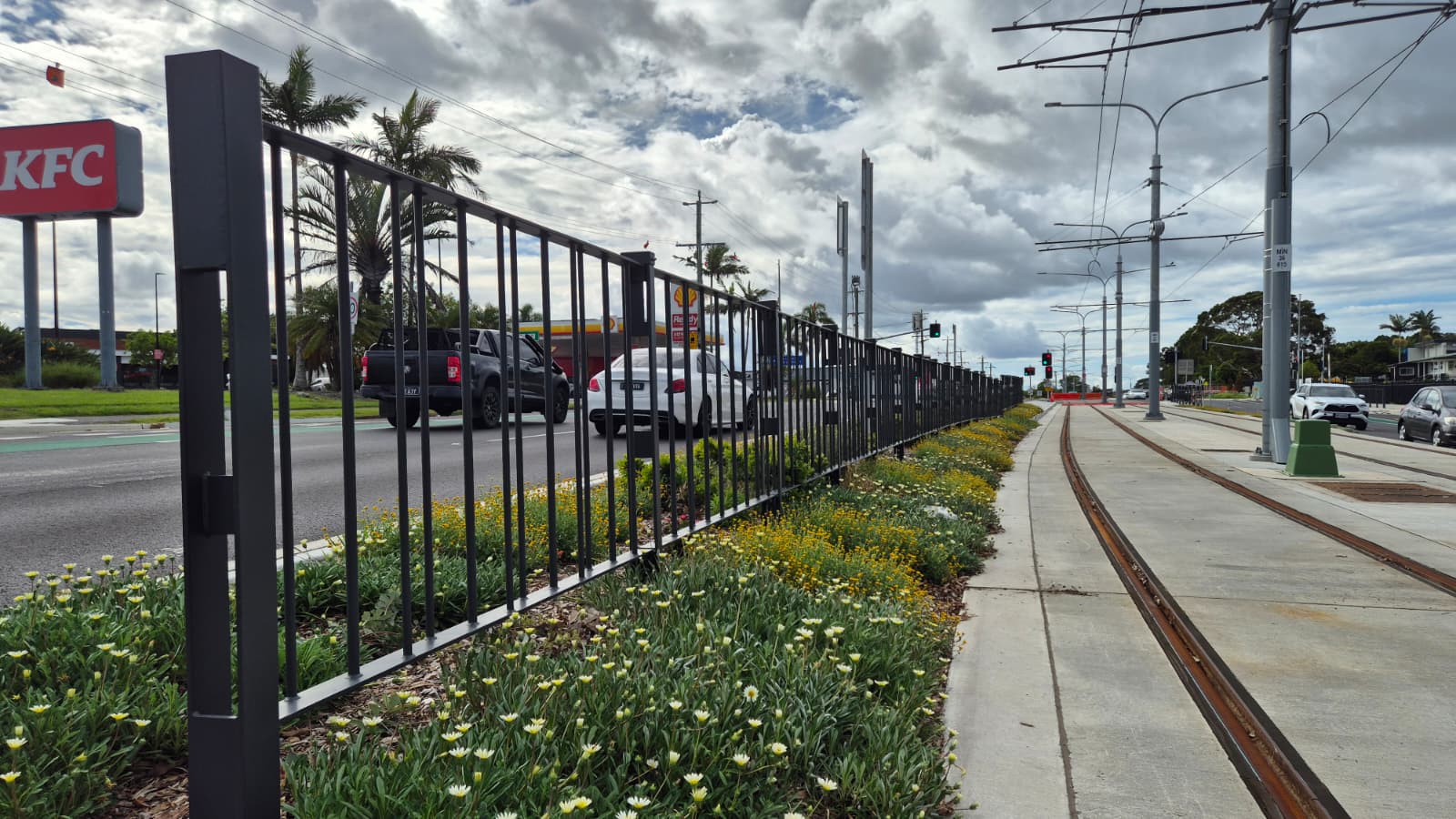
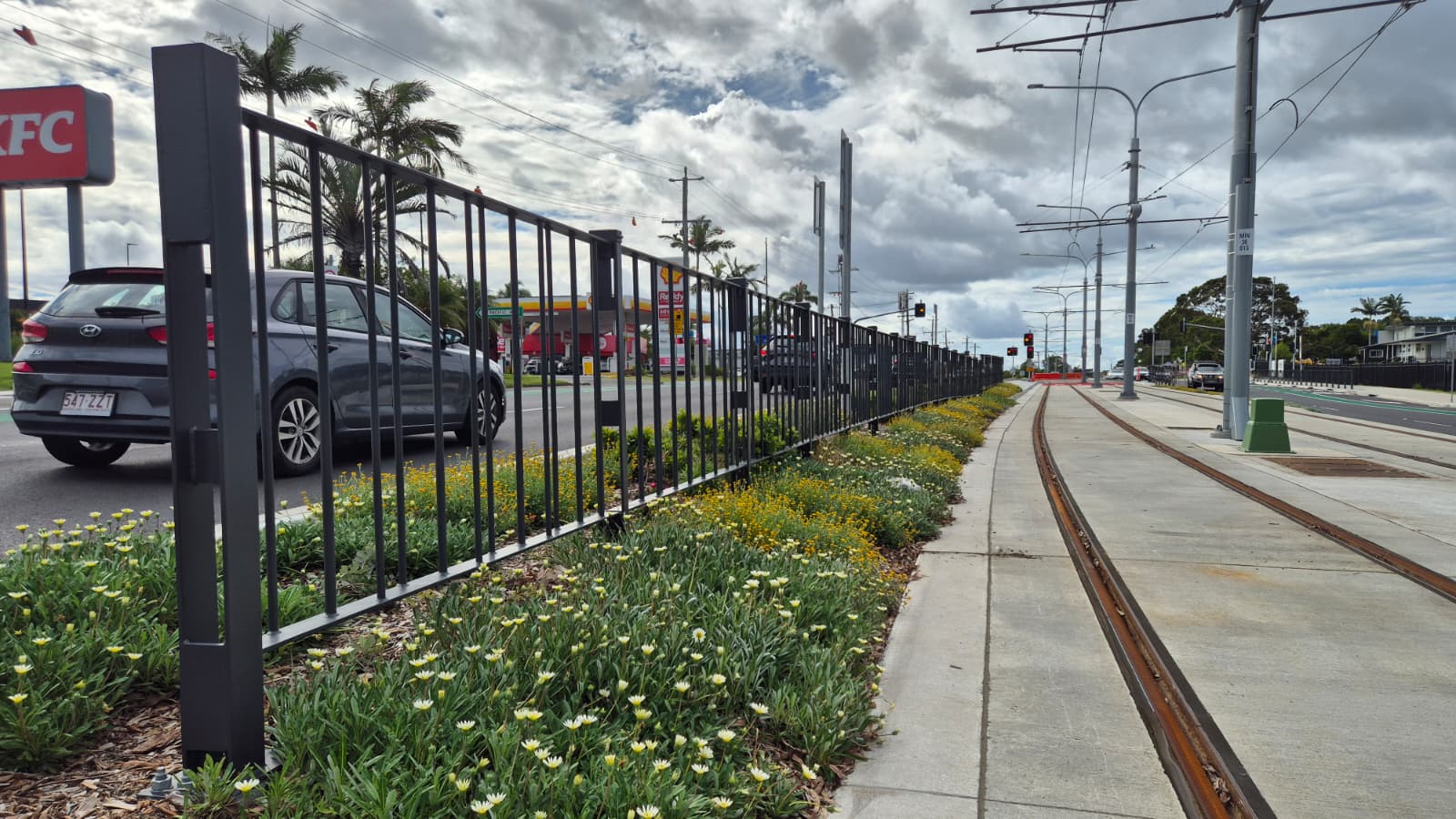
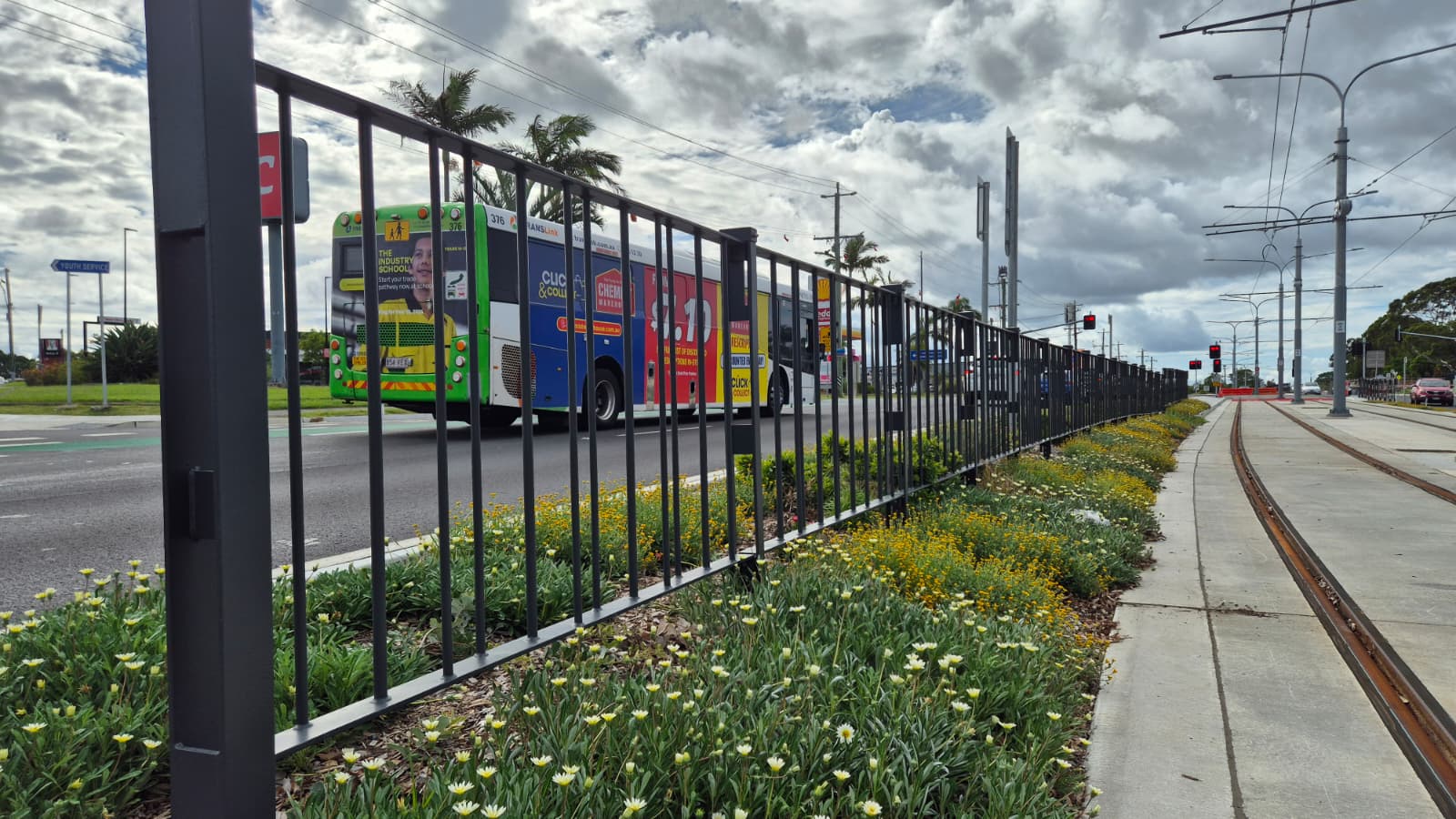
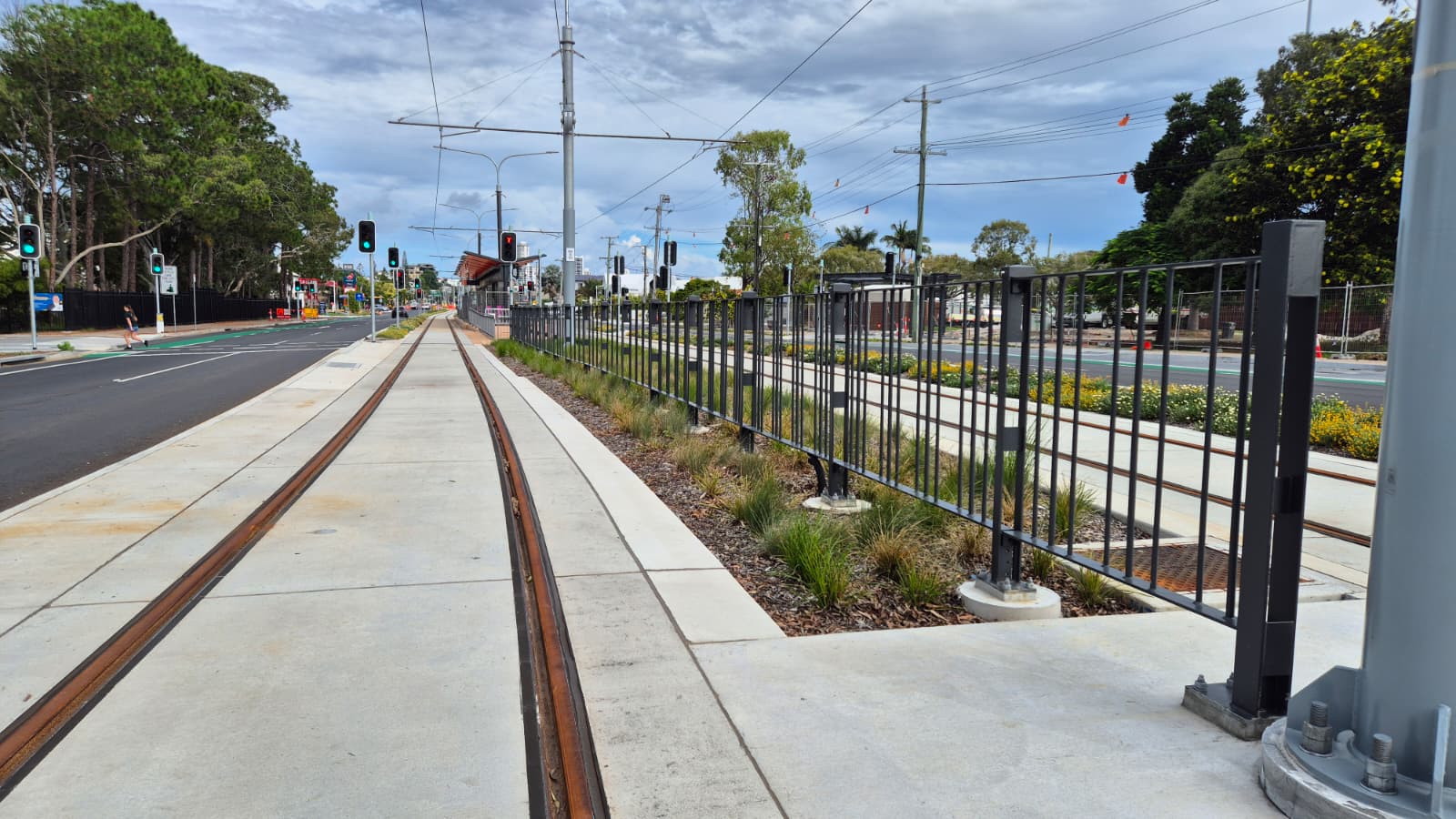
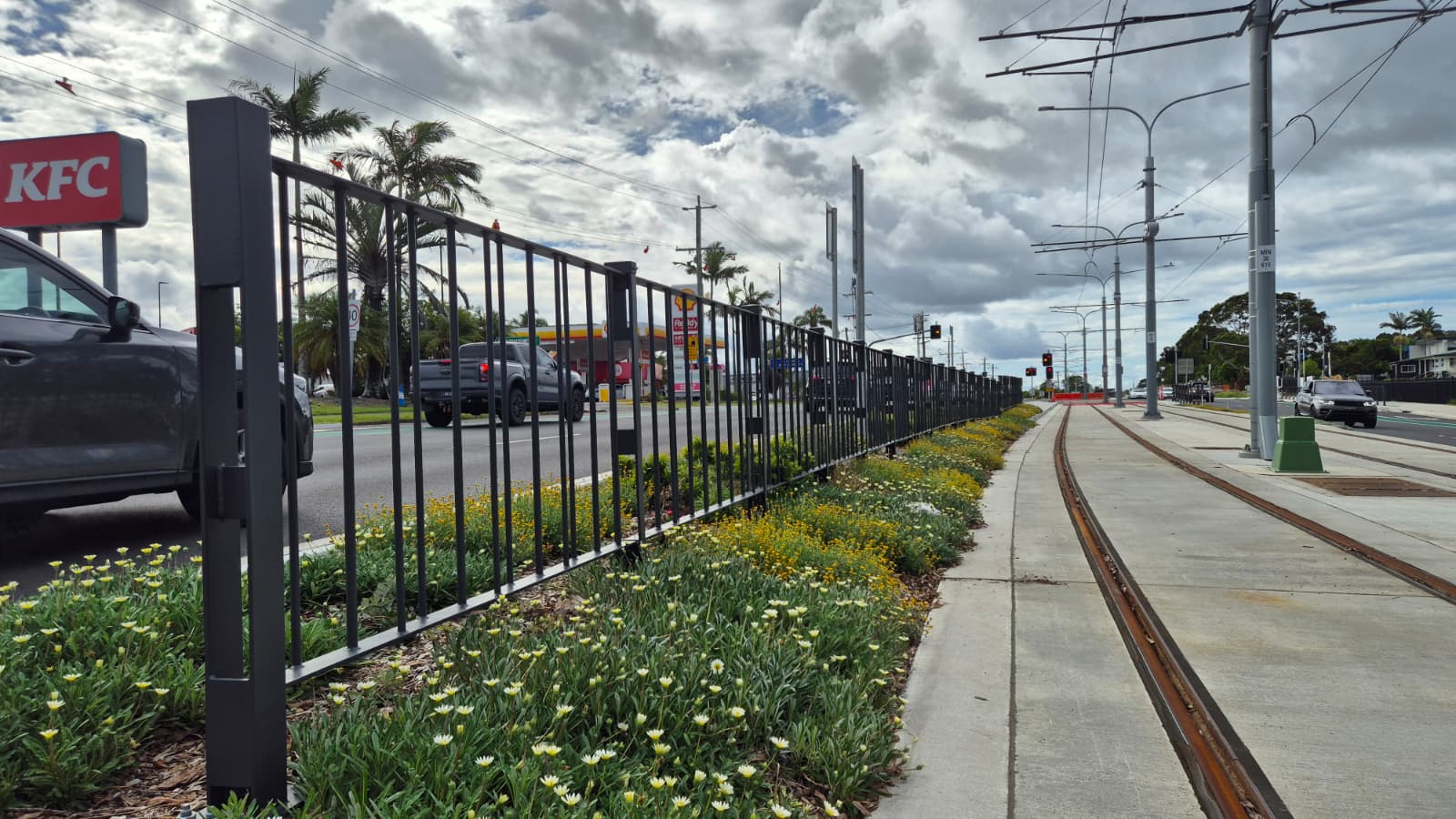
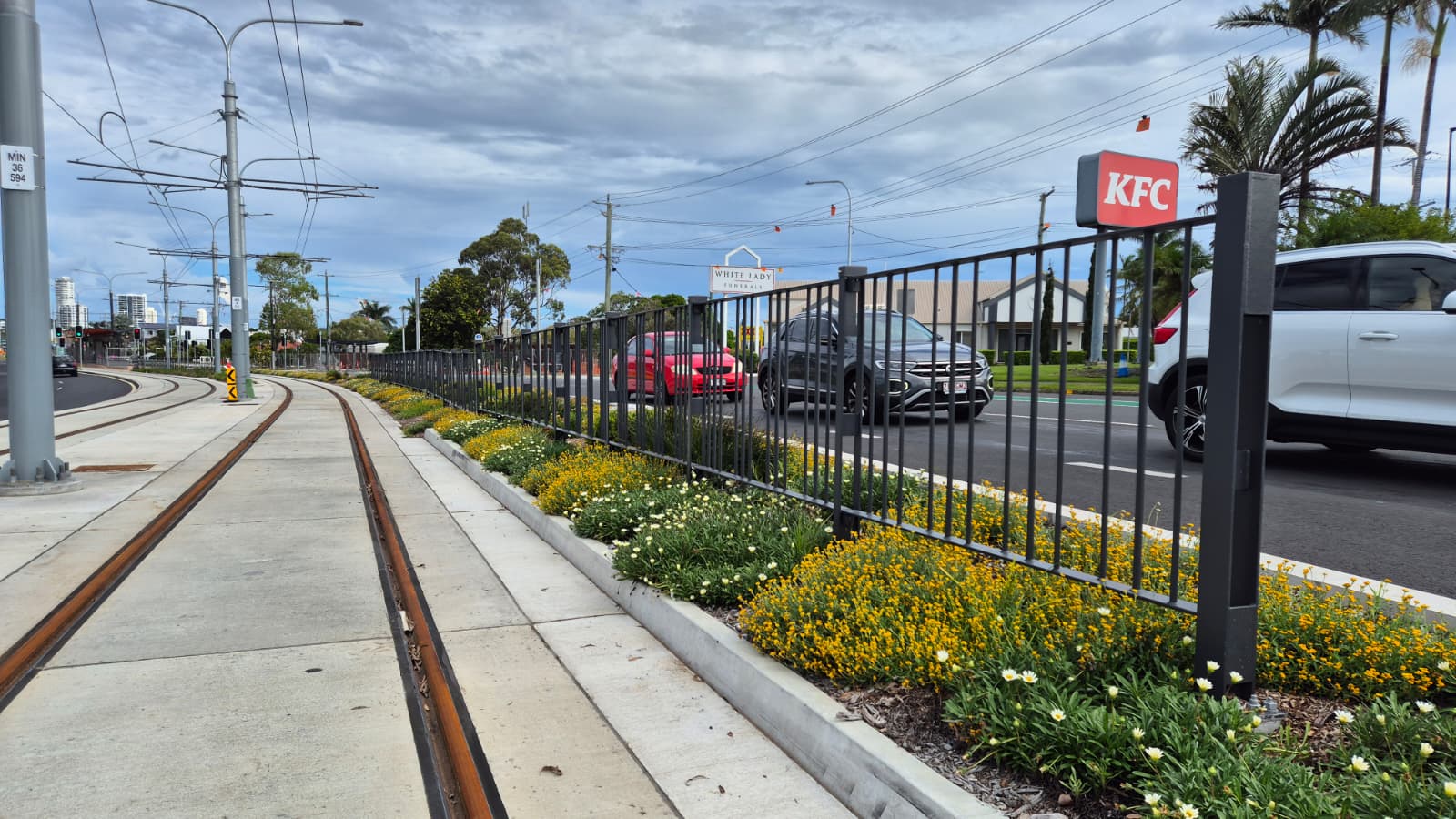
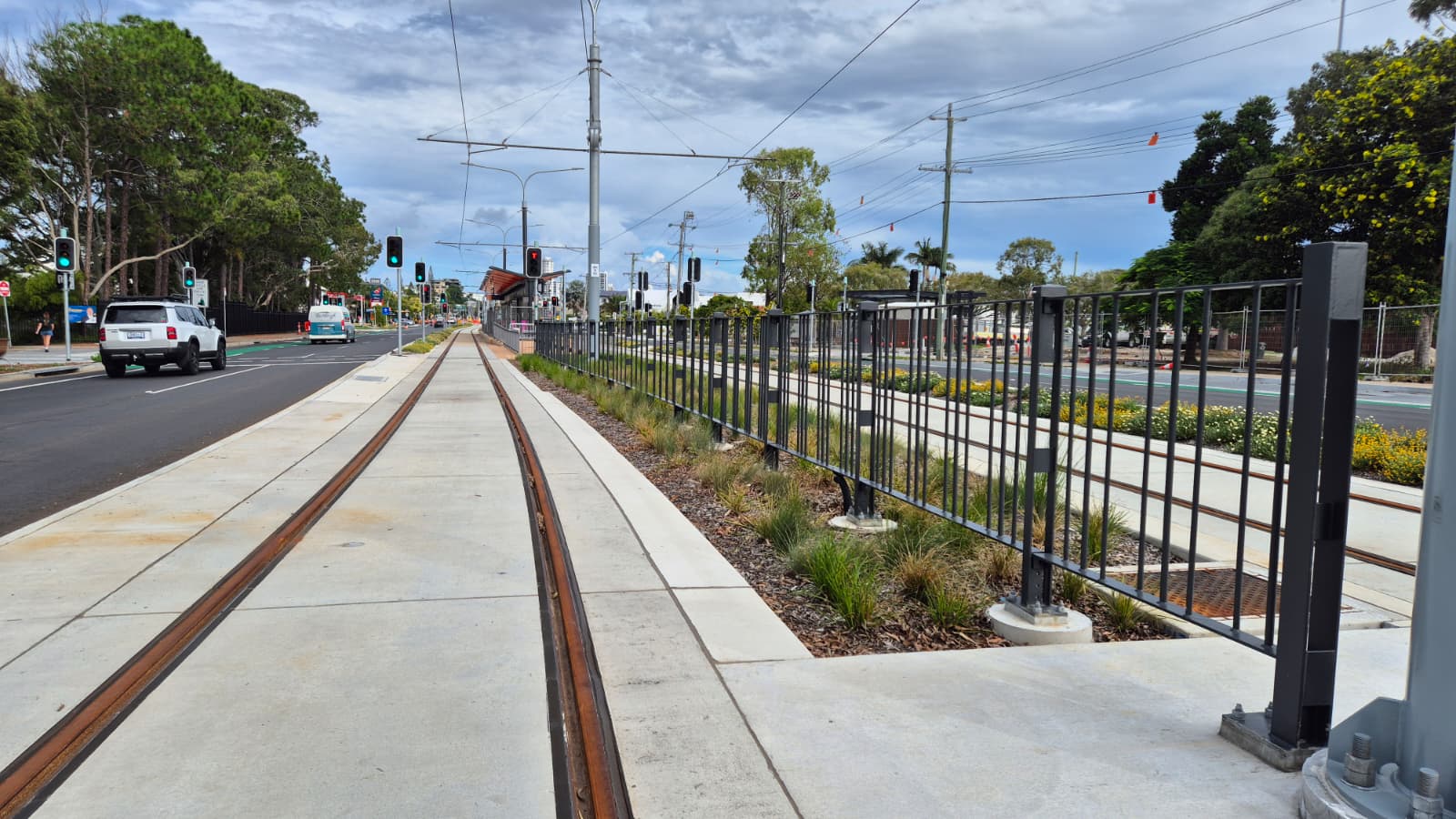
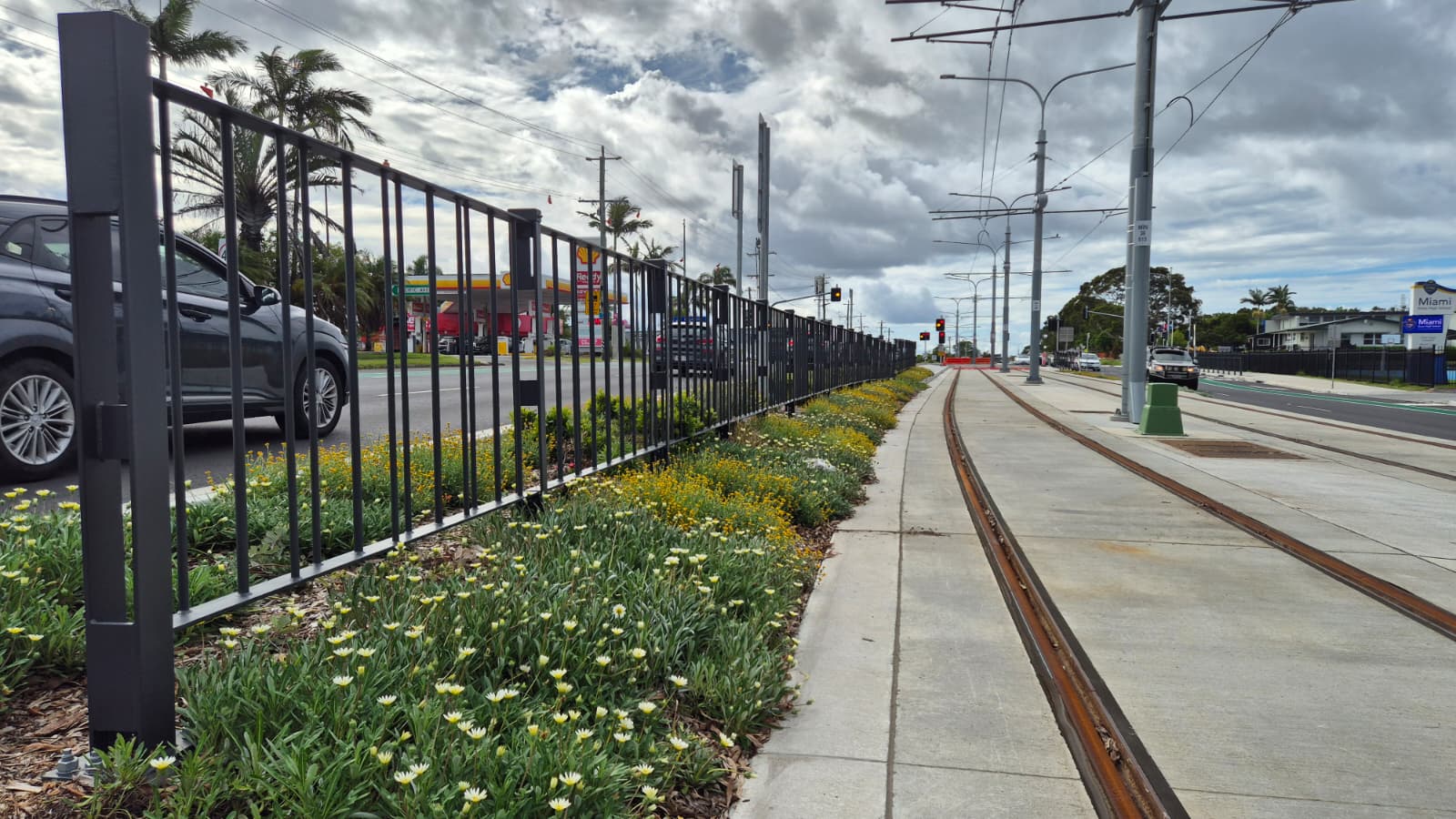
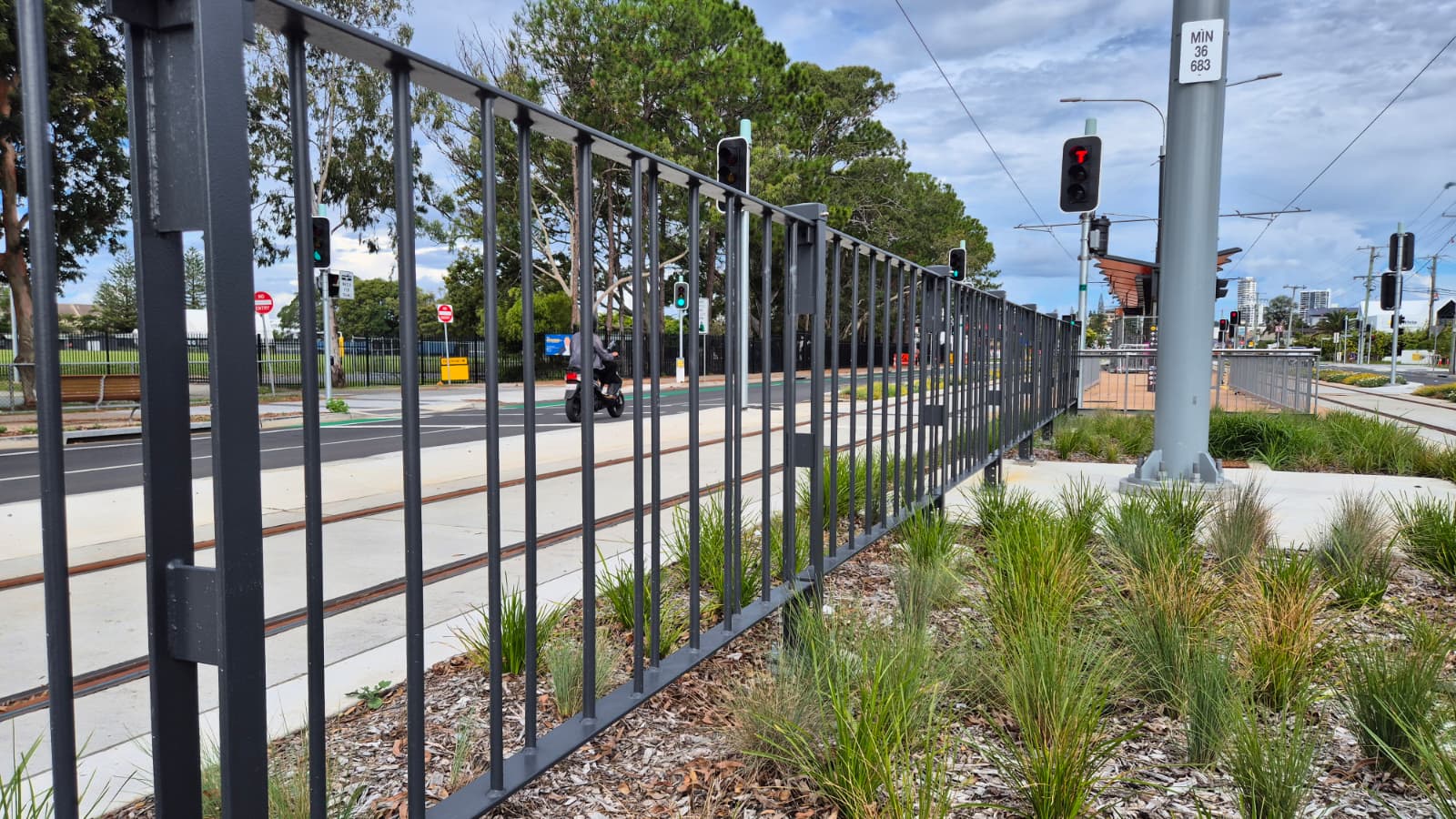
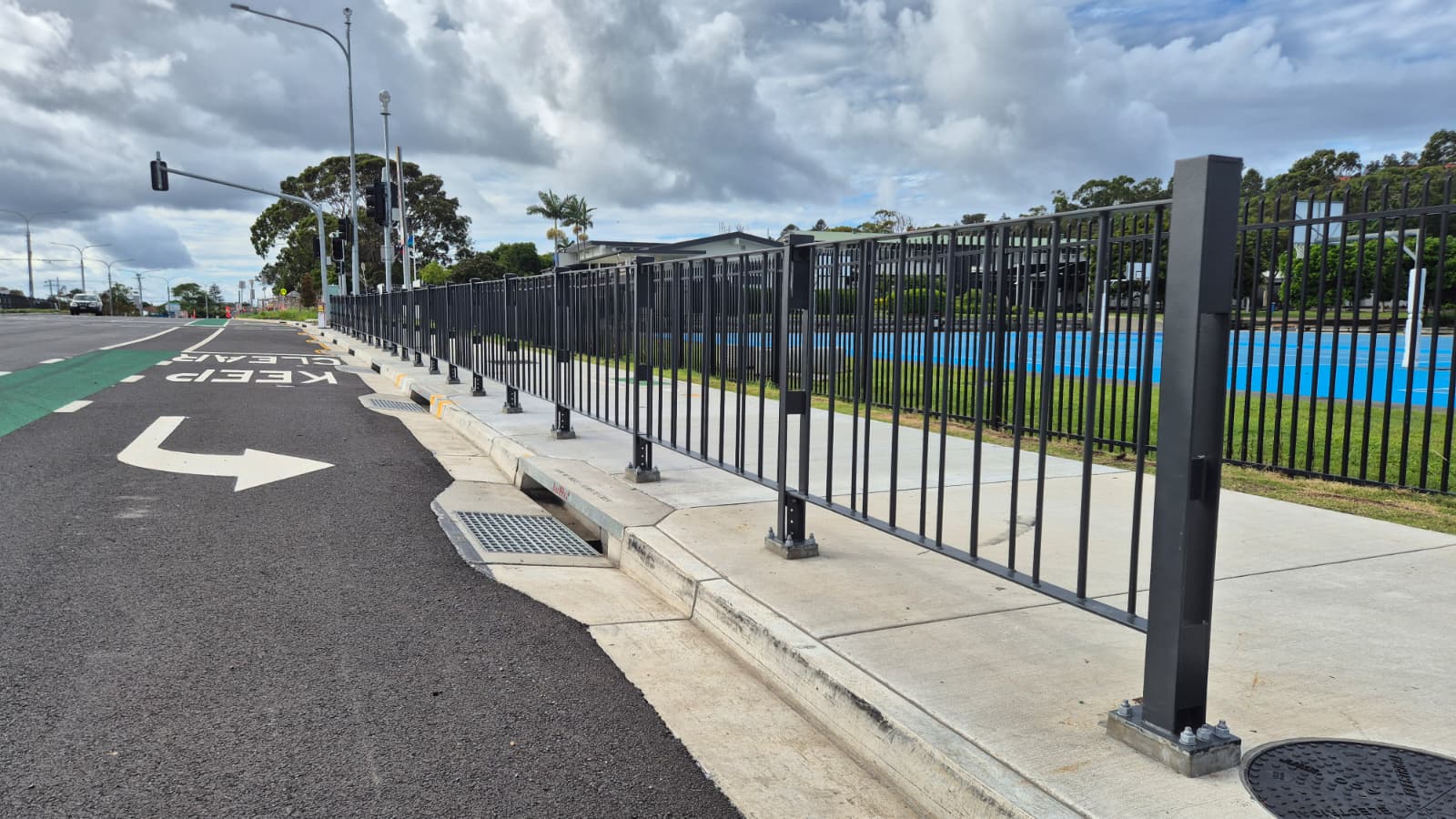
Guard-R Group supplied Street-Guard® Type 1 Pedestrian Fencing for installation on sections of the Gold Coast Light Rail Stage 3 corridor.
The fencing was installed by My Fence Australia as part of the broader pedestrian and streetscape works associated with the project.
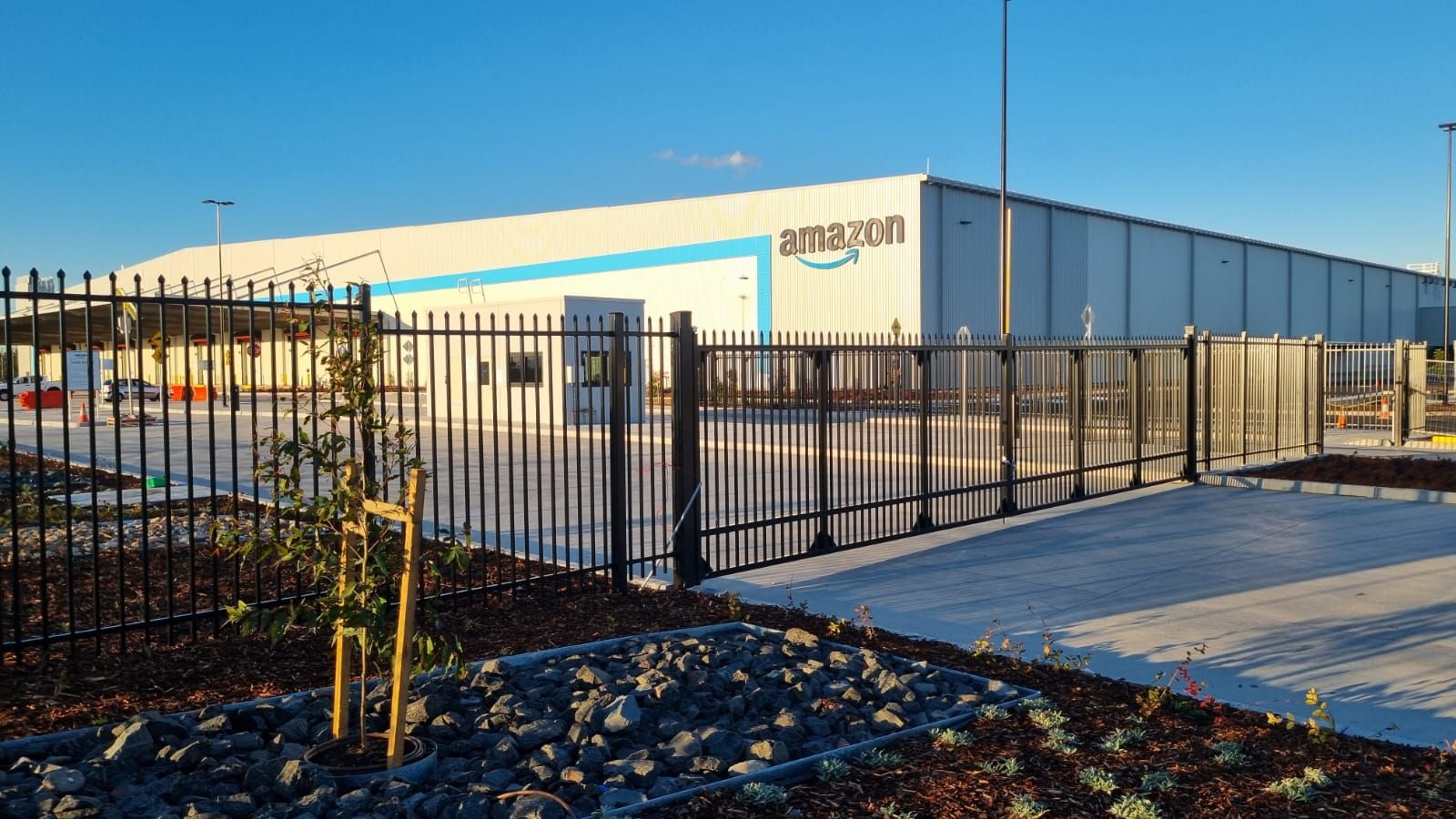
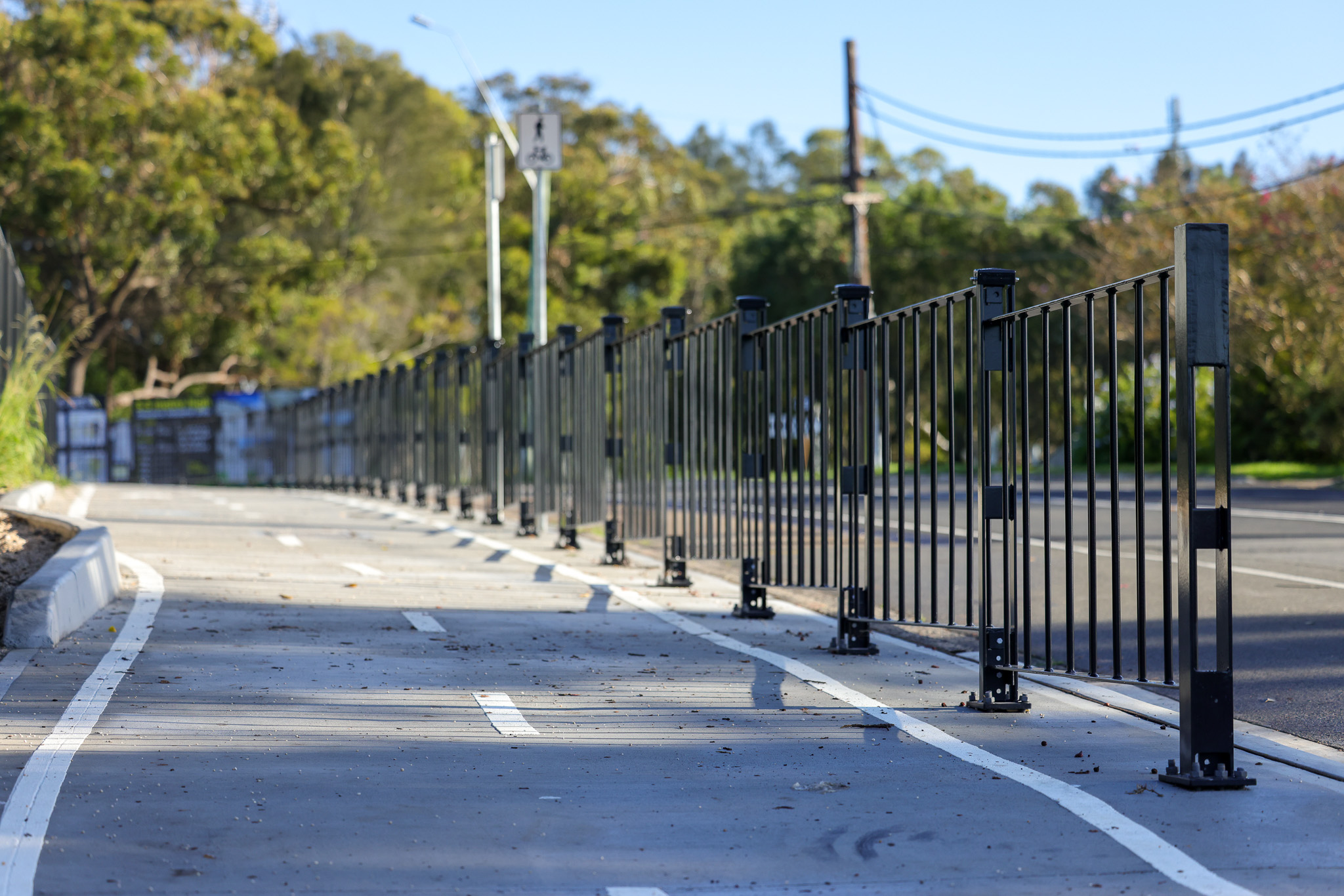
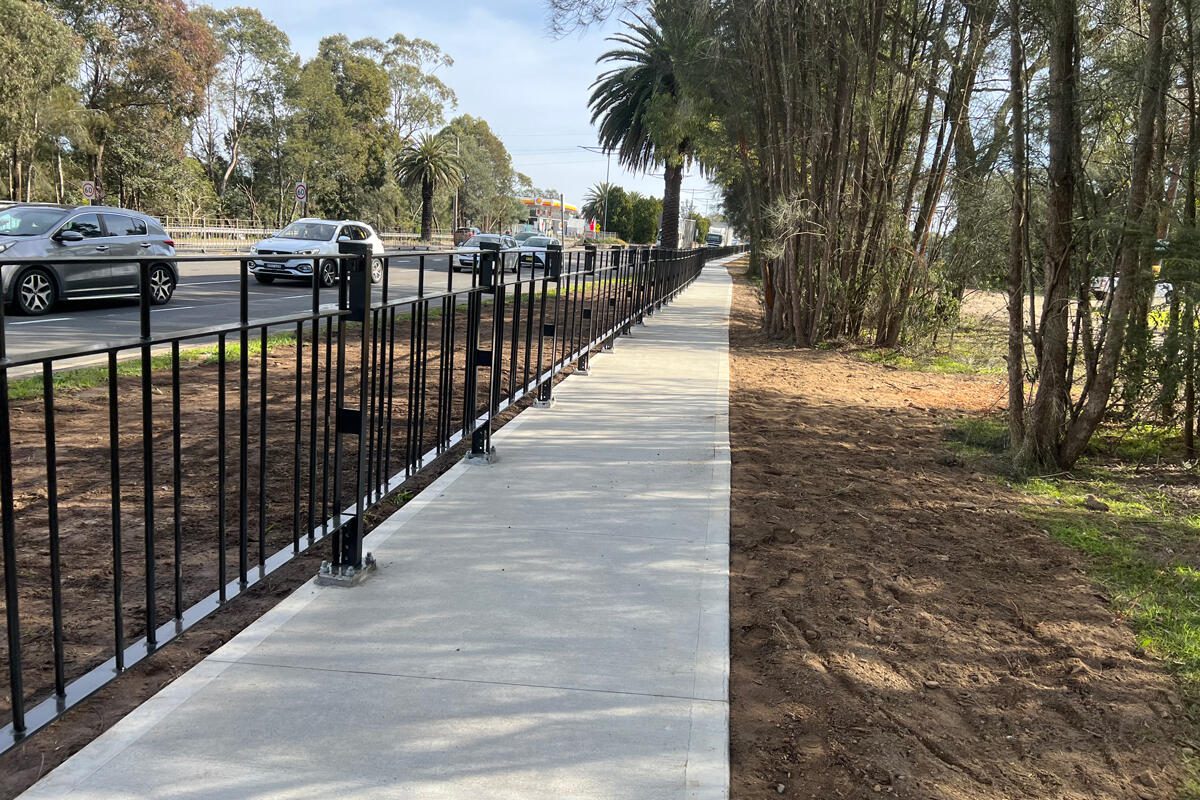
Type 1 pedestrian fencing consists of modular steel panels supported between posts. This fencing style is commonly used in public road, rail and transport environments where a permanent physical boundary is required to guide pedestrian movement.
Its open vertical-bar configuration maintains visibility through the fence, which is important near roads, intersections and transport facilities. The modular panel arrangement also allows the fencing alignment to respond to changing site conditions along a long infrastructure corridor.
Although the product is also used on transport projects in New South Wales, this installation forms part of a Queensland Department of Transport and Main Roads project. The project should therefore be described as Queensland transport infrastructure rather than as a Transport for NSW project.
Project Delivery
The Queensland Government entered into an agreement with GoldlinQ for the delivery of Stage 3, with John Holland selected as GoldlinQ’s design and construction contractor.
Major construction commenced in July 2022 following early utility works. Construction progressed along the corridor in stages to allow road access, pedestrian movement and surrounding business activity to continue while the light rail infrastructure was installed.
The project has since moved into full-alignment testing and commissioning.
The first tram travelled over the northern section of the new tracks in November 2025. Full-route testing between Broadbeach South and Burleigh Heads commenced in 2026, covering trams, signals, communications, electrical infrastructure and integration with the existing network.
As of July 2026, Transport and Main Roads lists the project as being in testing and commissioning, with passenger services expected to begin in mid-2026. Some finishing works may continue after operations commence.
Project Outcome
The Type 1 pedestrian fencing supplied for Gold Coast Light Rail Stage 3 forms part of the permanent pedestrian infrastructure supporting the new light rail corridor.
Its role is to help organise pedestrian movement and provide separation near roads, tram infrastructure, stations and designated crossing points.
The fencing works sit within a much larger transport project that will connect Broadbeach South, Mermaid Beach, Miami and Burleigh Heads to the existing G network.
Once operational, Stage 3 will increase public transport capacity, improve connections between tram and bus services and provide upgraded pedestrian and cycling facilities through the southern Gold Coast corridor.
Planning a Transport Infrastructure Project?
Whether you’re designing a road upgrade, light rail corridor, intersection or public infrastructure project, our team can provide technical advice, product documentation, CAD/BIM files and project pricing to support your specification.