
Pedestrian safety is a critical consideration, particularly where people interact with live traffic, intersections, and transport corridors. Poorly controlled pedestrian movement increases the risk of conflict with vehicles and can undermine broader road safety outcomes.
Selecting the correct RMS pedestrian fencing type plays a key role in managing this risk. It supports compliance, helps shape predictable pedestrian behaviour, and ensures safety measures align with real-world conditions. Transport for NSW specifications make it clear that fencing selection should be based on factors such as risk exposure, traffic speed, and pedestrian demand, rather than aesthetics or upfront cost.
Across Australia, RMS pedestrian fencing classifications provide a structured framework for specifying fencing systems based on road classification, traffic speed, and pedestrian risk exposure. Each fencing type is defined by its intended application and performance requirements, helping designers and engineers align fencing selection with site conditions.
The approach supports consistent safety outcomes while ensuring installations meet Transport for NSW specifications and broader regulatory expectations on public road projects.
Understanding RMS Pedestrian Fencing Classifications
Transport for NSW defines pedestrian fencing requirements under RMS specifications to ensure consistent safety performance across state and local road networks. These standards sit alongside relevant AS and AS/NZS requirements covering materials, welding, coatings, and durability.
Each RMS pedestrian fencing type is defined by its structural strength, intended risk environment, and ability to control pedestrian movement. Approval is based on verified testing, certified manufacturing processes, and compliance documentation.
The core function of RMS pedestrian fencing is to guide pedestrians toward safe crossing points, reduce informal road crossings, and minimise conflict between vehicles and people in complex traffic environments.

RMS Type 1 Pedestrian Fencing: Purpose and Applications
What Is RMS Type 1 Pedestrian Fencing?
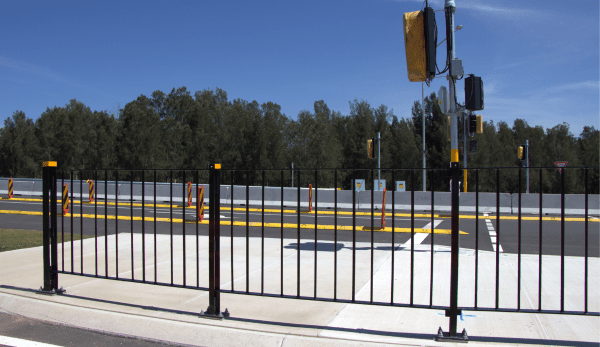
Type 1 pedestrian fencing is an RMS-compliant system engineered to manage pedestrian movement in safety-critical locations. It is typically constructed from steel with certified welds and protective coatings designed for long-term outdoor exposure. The fencing uses modular panels, posts, and brackets that allow a consistent layout while maintaining compliance with Transport for NSW specifications.
Where RMS Type 1 Fencing Is Commonly Used
Type 1 pedestrian fencing is commonly specified in low to moderate speed environments where pedestrian activity is frequent and requires clear guidance, but where the likelihood and severity of vehicle impact is relatively controlled. In these settings, the primary objective is to discourage informal crossings and channel pedestrians toward designated crossing points rather than provide high containment.
Typical locations include footpaths, school zones, urban streetscapes, signalised intersections, and controlled pedestrian crossings on local and distributor roads, where traffic speeds are lower, and pedestrian behaviour can be effectively managed through visual and physical separation.
Key Benefits of RMS Type 1 Fencing
When applied in appropriate road environments, Type 1 pedestrian fencing provides the right balance between safety performance, compliance, and project efficiency. Its design supports controlled pedestrian movement while meeting Transport for NSW and Australian Standards requirements.
- Cost effectiveness for low to moderate risk locations
It delivers reliable pedestrian control without the higher material and installation costs associated with heavier containment systems. This makes it well-suited to projects where risk is managed through speed control, layout, and crossing design rather than impact resistance alone. - Clear visual guidance for pedestrian behaviour
The fencing creates a continuous, unclimbable barrier that discourages informal crossings and directs pedestrians toward designated pathways and crossing points. This visual and physical separation helps reduce unpredictable pedestrian movements in busy streetscapes and transport corridors. - Ease of installation and integration
A modular, specification-ready design allows for efficient installation, staged works, and straightforward integration with footpaths, crossings, and other roadside infrastructure. This supports delivery on live road projects while maintaining RMS and AS/NZS compliance.
Limitations of RMS Type 1 Fencing
Type 1 pedestrian fencing is not intended for high-speed or high-impact road environments where the likelihood or severity of vehicle strikes is elevated. Compared to higher grade systems, it provides lower containment and impact resistance, meaning it should not be specified for medians, highway corridors, or locations with unrestricted traffic speeds where stronger pedestrian protection is required.
RMS Type 5 Pedestrian Fencing: High Risk Safety Solutions
What Is RMS Type 5 Pedestrian Fencing?
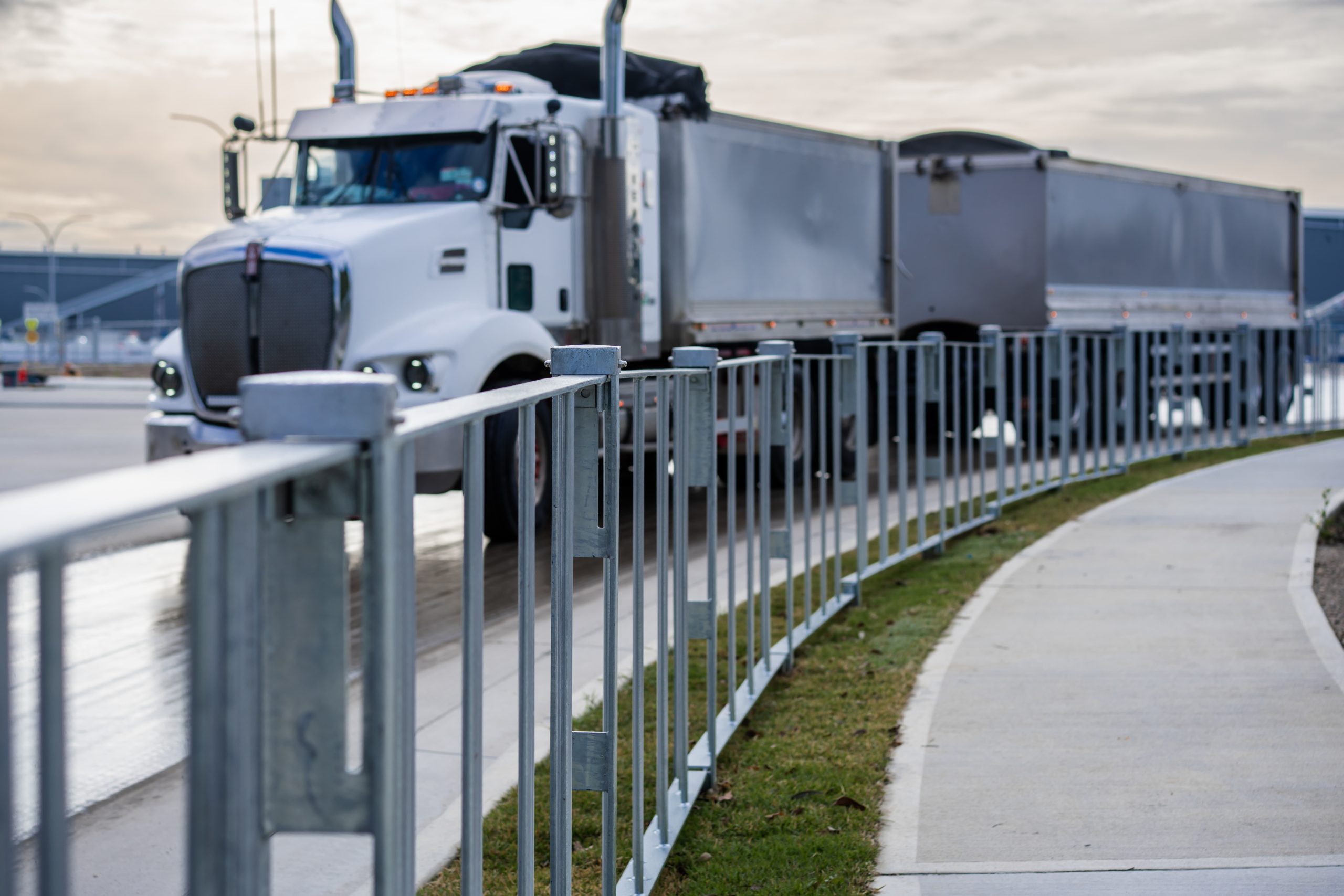
Type 5 pedestrian fencing is a higher-strength RMS-approved solution designed for elevated risk environments. Constructed from durable steel, it provides increased containment, impact resistance, and long-term structural performance. The system is engineered to collapse as a unit on impact, reducing force transfer and improving pedestrian safety outcomes.
Typical Applications for RMS Type 5 Fencing
Type 5 pedestrian fencing is commonly specified along major arterial roads and state highways where higher traffic speeds and volumes increase the potential severity of vehicle–pedestrian incidents. In these environments, stronger containment and impact performance are required to manage elevated risk.
It is also widely used in medians, bridge approaches, and dense urban corridors where pedestrians are positioned close to live traffic lanes and escape space is limited, making robust separation and controlled movement essential for safety and compliance.
Why Type 5 Is Preferred for High-Speed Road Environments
In high-speed road environments, Type 5 pedestrian fencing provides higher containment capacity and structural durability compared to lighter fencing systems. Its robust steel construction and engineered impact behaviour are suited to locations where vehicle strike risk is increased due to traffic speed, volume, or limited separation distances.
This performance aligns with stricter RMS safety requirements for impact-prone and safety-critical locations, making Type 5 fencing the preferred option where pedestrian protection must be prioritised while maintaining full regulatory compliance.
Other RMS Pedestrian Fencing Types and When to Use Them
Beyond Type 1 and Type 5, RMS pedestrian fencing includes several other approved configurations designed to suit specific site conditions and pedestrian behaviours.
Matching Fencing Types to Specific Site Conditions
- Type 2 fencing is designed to discourage unsafe crossings and guide pedestrians along designated routes, making it well-suited to urban streetscapes and transit corridors where controlled movement is required.
- Type 3 fencing provides a higher level of physical restriction by preventing climbing, squeezing through, or unauthorised access, with integrated reflective elements that improve visibility in heavy traffic and low light environments.
- Type 4 fencing is commonly specified near school zones, intersections, and other safety-sensitive locations where consistent pedestrian guidance and restricted crossing are essential.
- Type 6 fencing supports orderly crowd management near transport hubs, medians, and high-flow pedestrian routes, helping manage pedestrian behaviour in complex and high-volume public spaces.
When a Custom or Project-Specific Solution Is Required
In complex urban layouts, standard fencing configurations may not fully address site constraints, pedestrian behaviour, or risk exposure. In these cases, project-specific combinations of pedestrian fencing, guardrails, and other roadside safety systems may be required to achieve the intended safety outcome.
Integration with vehicle barriers, drainage, structures, and existing infrastructure is often necessary, requiring early coordination between designers, engineers, and approval authorities to ensure compliance and constructability.
Key Factors to Consider When Selecting RMS Pedestrian Fencing
- Traffic Speed and Vehicle Volume: Higher speed limits and vehicle volumes increase impact risk and influence whether Type 1 pedestrian fencing or Type 5 pedestrian fencing is appropriate.
- Pedestrian Risk and Movement Patterns: Desire lines, informal crossings, and pedestrian crowd behaviour should guide fencing selection and placement.
- Location and Installation Environment: Verge installations, medians, bridges, and intersections each present different risk profiles that affect fencing choice.
- Compliance and Approval Requirements: All RMS pedestrian fencing must meet Transport for NSW and AS or AS/NZS standards. Early coordination with authorities supports smoother approvals.
Common Pedestrian Fencing Specification Mistakes to Avoid
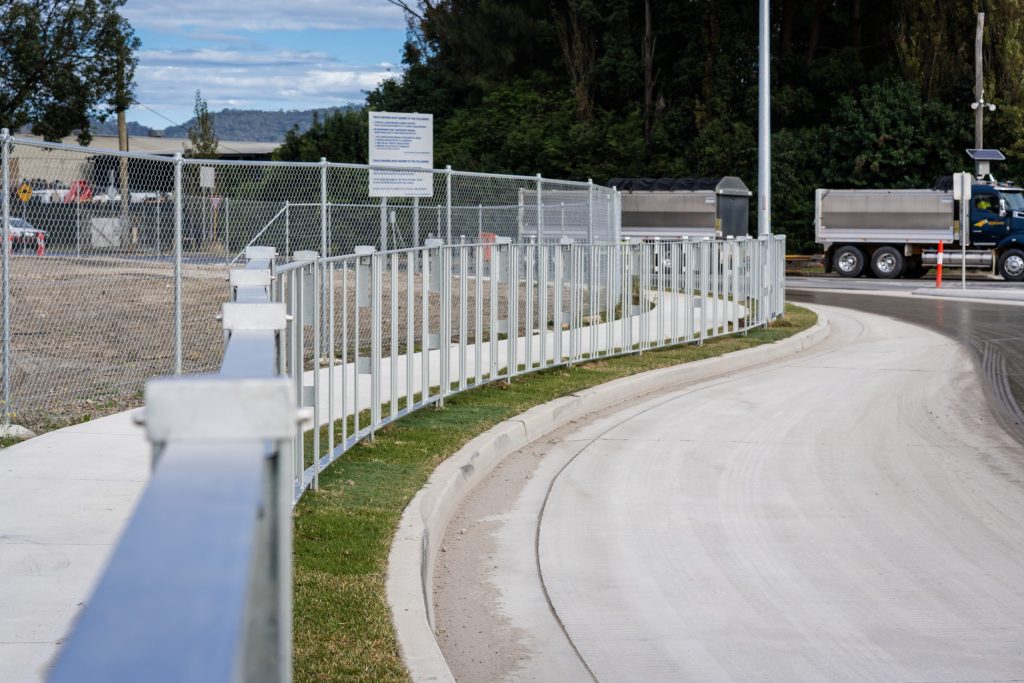
Incorrect fencing selection is a common contributor to reduced safety performance on public road projects. Avoiding these specification pitfalls helps ensure pedestrian fencing delivers the intended risk reduction and remains compliant over its service life.
- Selecting fencing based on upfront cost alone
Focusing solely on initial cost can result in fencing that does not match the site’s risk profile or traffic conditions. This approach often leads to compromised safety outcomes and increased remediation or replacement costs over time. - Using Type 1 fencing in high-risk environments
Specifying Type 1 pedestrian fencing in high-speed or impact-prone locations exposes pedestrians to greater risk. These environments typically require higher containment systems designed to manage vehicle strike scenarios. - Overlooking lifecycle durability and maintenance needs
Failing to consider corrosion protection, coating performance, and long-term durability can reduce fencing effectiveness over time, particularly in harsh Australian environments.
Not accounting for pedestrian behaviour and desire lines
Ignoring how pedestrians actually move through a site can result in fencing that is bypassed, climbed, or misused, undermining its ability to guide safe and predictable movement.
How Guard-R Group Supports RMS Compliant Pedestrian Fencing Projects
Delivering effective pedestrian safety outcomes requires more than compliant products. It also depends on experience, technical understanding, and practical support throughout the project lifecycle.
- Proven experience across major road and urban projects
Guard-R Group has delivered RMS pedestrian fencing across a wide range of state and local road projects, including arterial road upgrades, urban corridors, intersections, and public precincts. Our extensive experience supports informed fencing selection that reflects real-world construction and operational conditions. - Compliance-focused design and manufacturing All of our pedestrian fencing systems are engineered and manufactured to align with Transport for NSW specifications and relevant Australian and AS or AS/NZS standards. Certified welds, documented coatings, and verified manufacturing processes support consistent compliance and long-term performance.
- Support for engineers, councils, and contractors
We provide specification assistance, technical documentation, and practical guidance from early design through tender and construction. This support helps reduce approval risks, streamline delivery, and ensure fencing systems perform as intended once installed.
CONCLUSION: Safer Roads Start With the Right Pedestrian Fencing
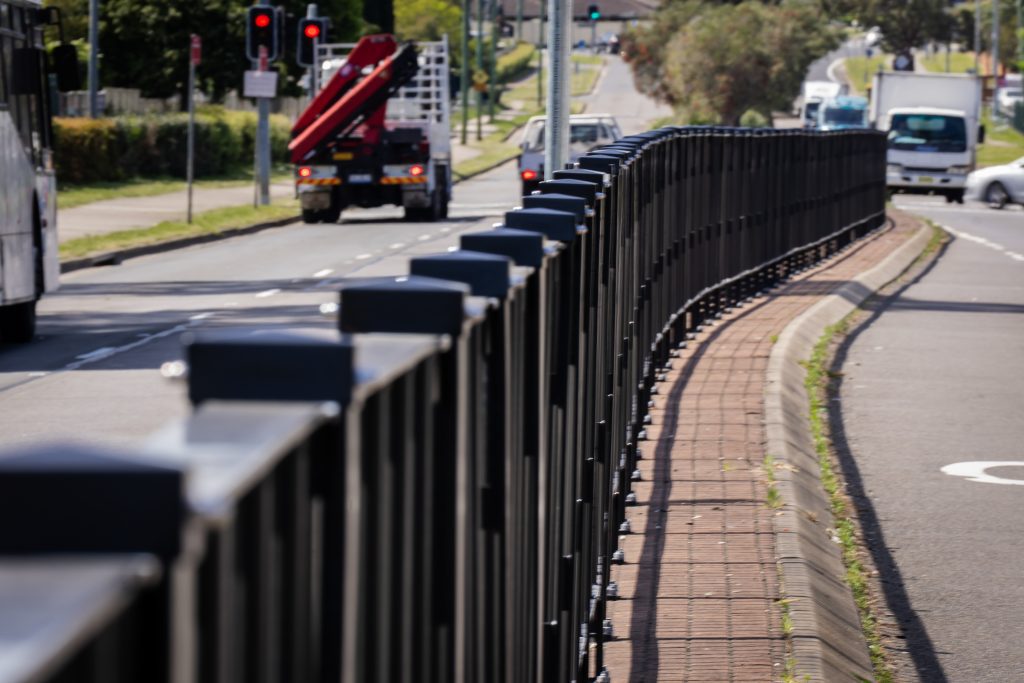
Selecting the appropriate pedestrian fencing plays a critical role in managing risk, guiding behaviour, and achieving safer outcomes on public roads. By understanding when to use Type 1, Type 5, and other RMS fencing types, project teams can align safety performance with site conditions and compliance requirements. With experience across Australian road environments and a strong focus on standards-led delivery, Guard-R Group supports councils, engineers, and contractors in implementing pedestrian fencing solutions that perform as intended over the long term.
Request a Consultation: Get Tailored Project Guidance
Speak with our engineering team for compliance advice, design support, certification documentation, and project-specific configuration recommendations. Weld testing, coating certifications, and RMS documentation are available on request.