
Across Queensland, pedestrian fencing has become an essential part of creating safer road environments and managing how pedestrians interact with live traffic. For engineers, road safety auditors, contractors, and TMR project teams, effective fencing is not simply about meeting specifications. It is about guiding pedestrian movement, improving separation from vehicles, and reducing the likelihood of unsafe crossing behaviour in high-risk areas.
When planned properly, pedestrian fencing helps direct people toward safer crossing locations, supports smoother traffic flow, and contributes to broader Safe System outcomes.
As urban corridors become busier and pedestrian volumes continue to rise, the need for well-designed TMR pedestrian fencing solutions is becoming increasingly important across Queensland infrastructure projects.
Why Pedestrian Fencing Matters in Queensland
Pedestrian incidents remain a major road safety concern across Australia. National road safety data continues to show that pedestrian fatalities and serious injuries frequently occur in urban environments and along higher-speed roads where interactions between vehicles and pedestrians are less controlled.
In 2024 alone, 174 pedestrian deaths were recorded nationally, while more than 2,400 pedestrian hospitalisations occur each year. A significant proportion of these incidents takes place in urban areas and on roads with speed limits of 50km/h or higher, reinforcing the importance of effective pedestrian control and separation measures.
For road safety auditors and infrastructure teams, this reinforces a key principle:
Reducing uncontrolled pedestrian interaction with traffic is essential.
Well-designed road safety fencing QLD projects are particularly valuable in locations where:
- Pedestrian desire lines conflict with traffic flow
- Mid-block crossing activity is common
- School zones require stronger pedestrian control
- Median refuges and staged crossings need guidance
- Transport hubs generate heavy foot traffic
In such environments, pedestrian safety barriers help create safer and more predictable pedestrian movement patterns by guiding people toward designated crossing points and discouraging unsafe mid-block crossings. They also improve driver awareness, support smoother traffic flow, and reduce the likelihood of sudden pedestrian movements in high-risk or high-speed areas.
TMR Pedestrian Fencing Requirements
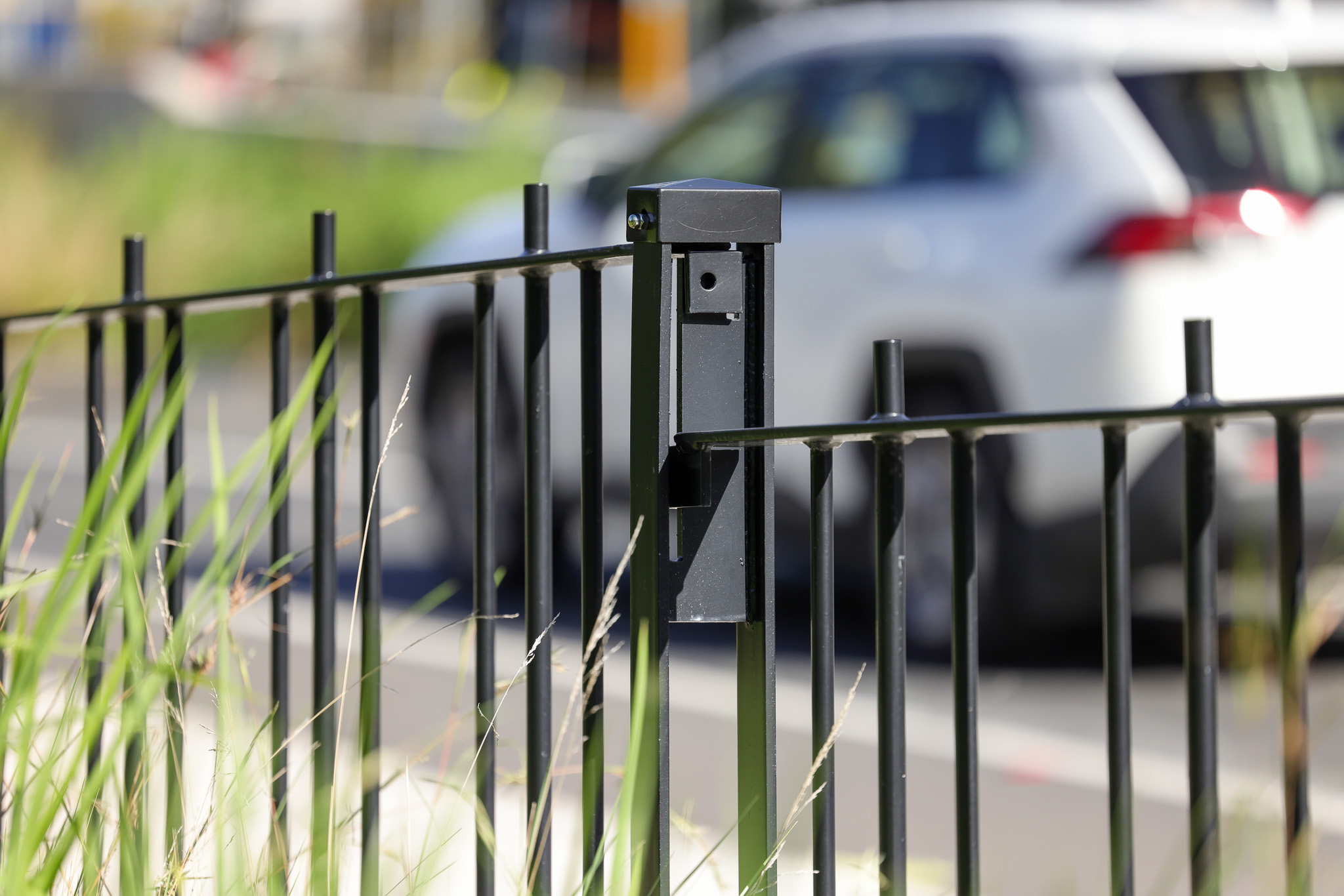
The Department of Transport and Main Roads provides detailed guidance on the use and placement of TMR pedestrian fencing across Queensland infrastructure projects. These guidelines help project teams improve pedestrian safety and ensure fencing integrates properly with crossings, medians, footpaths, and surrounding road infrastructure.
The core purpose of fencing within TMR projects is to:
- Prevent unsafe pedestrian crossing movements
- Direct pedestrians toward designated crossing facilities
- Improve separation between vehicles and pedestrians
- Support safer road-user behaviour overall
However, one of the most important considerations within TMR fencing requirements is that fencing must respond to actual pedestrian behaviour, not simply attempt to restrict it.
This distinction is critical as poorly planned pedestrian fencing Queensland installations can unintentionally create new safety risks by:
- Encouraging pedestrians to cross at even less safe locations
- Creating trapping points near intersections or medians
- Restricting accessibility and pedestrian flow
- Increasing vandalism or maintenance issues over time
Given this context, fencing should always be integrated into broader road safety planning and coordinated with crossings, pedestrian flow, and surrounding infrastructure rather than treated as a standalone element.
Key TMR Design Considerations
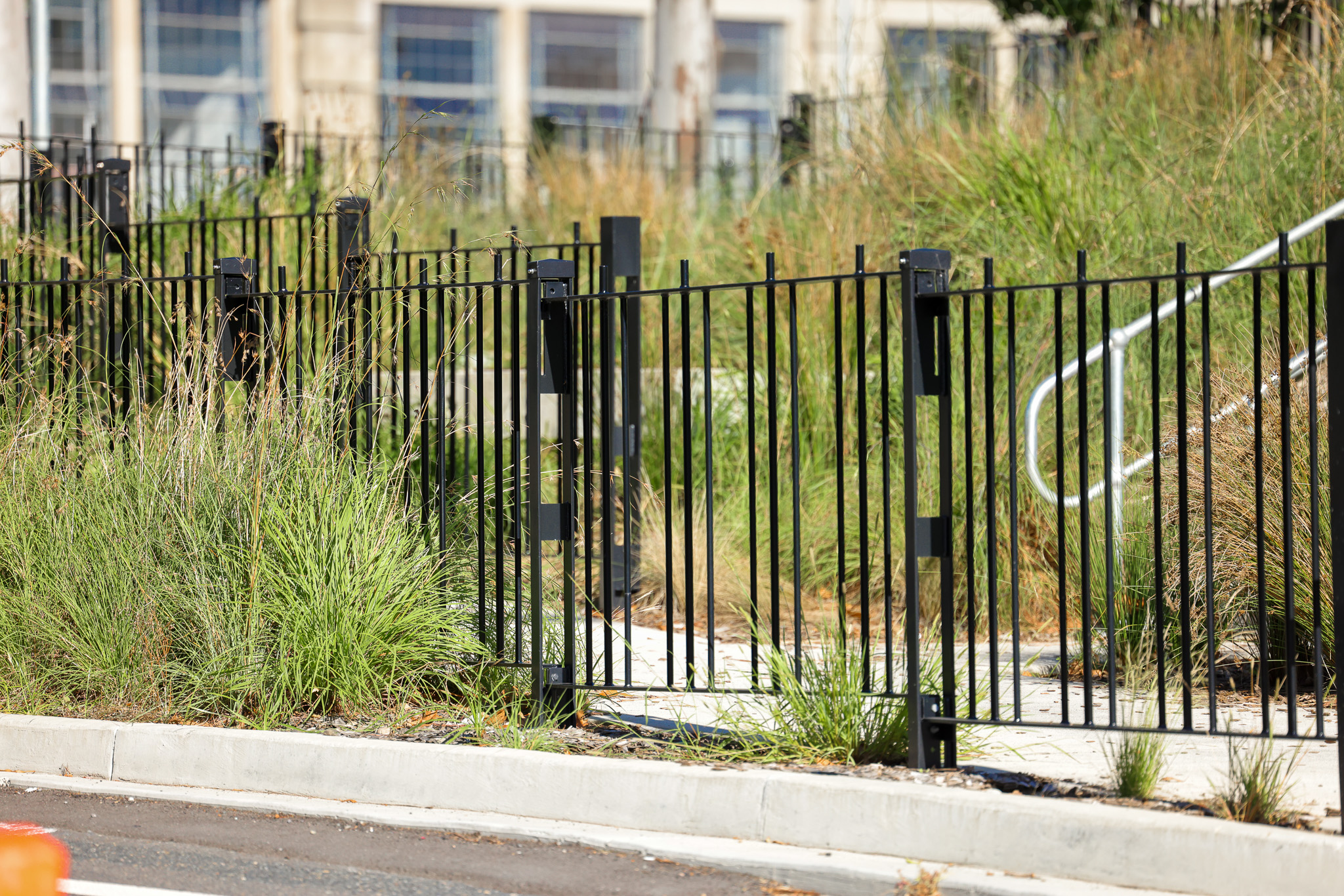
For engineers, contractors, and road safety auditors, several design considerations are particularly important when assessing TMR pedestrian fencing installations.
Footpath Installations
When fencing is installed adjacent to traffic lanes, adequate clearance and pedestrian accessibility must be maintained. Key considerations include:
- Minimum 200mm offset from traffic lanes
- Avoiding narrow secondary corridors between fencing and traffic
- Preserving accessible pedestrian widths
- Maintaining unobstructed pedestrian flow
If pedestrian space becomes constrained, fencing can create discomfort, congestion, or unsafe movement behaviour.
Median Installations
Median fencing is commonly used to support staged crossings and pedestrian refuges. Important requirements include:
- Minimum 450mm clearance from traffic lanes
- Sufficient refuge space for waiting pedestrians
- Clear visibility between pedestrians and approaching vehicles
- Safe alignment with crossing infrastructure
Effective pedestrian barrier systems projects ensure medians function as controlled refuge areas rather than isolated waiting points.
School Zones
School environments require additional attention due to unpredictable pedestrian behaviour and high child pedestrian activity. For school-zone road safety fencing projects, considerations typically include:
- Directing children toward supervised crossings
- Avoiding climbable horizontal rails
- Maintaining strong sightlines between drivers and pedestrians
- Improving visibility with reflective treatments where required
In such environments, fencing design must balance control, visibility, and accessibility while accounting for unpredictable child behaviour, guiding movement safely toward supervised crossings, and maintaining clear sightlines for drivers and school supervisors.
Road Safety Auditors: What to Look For
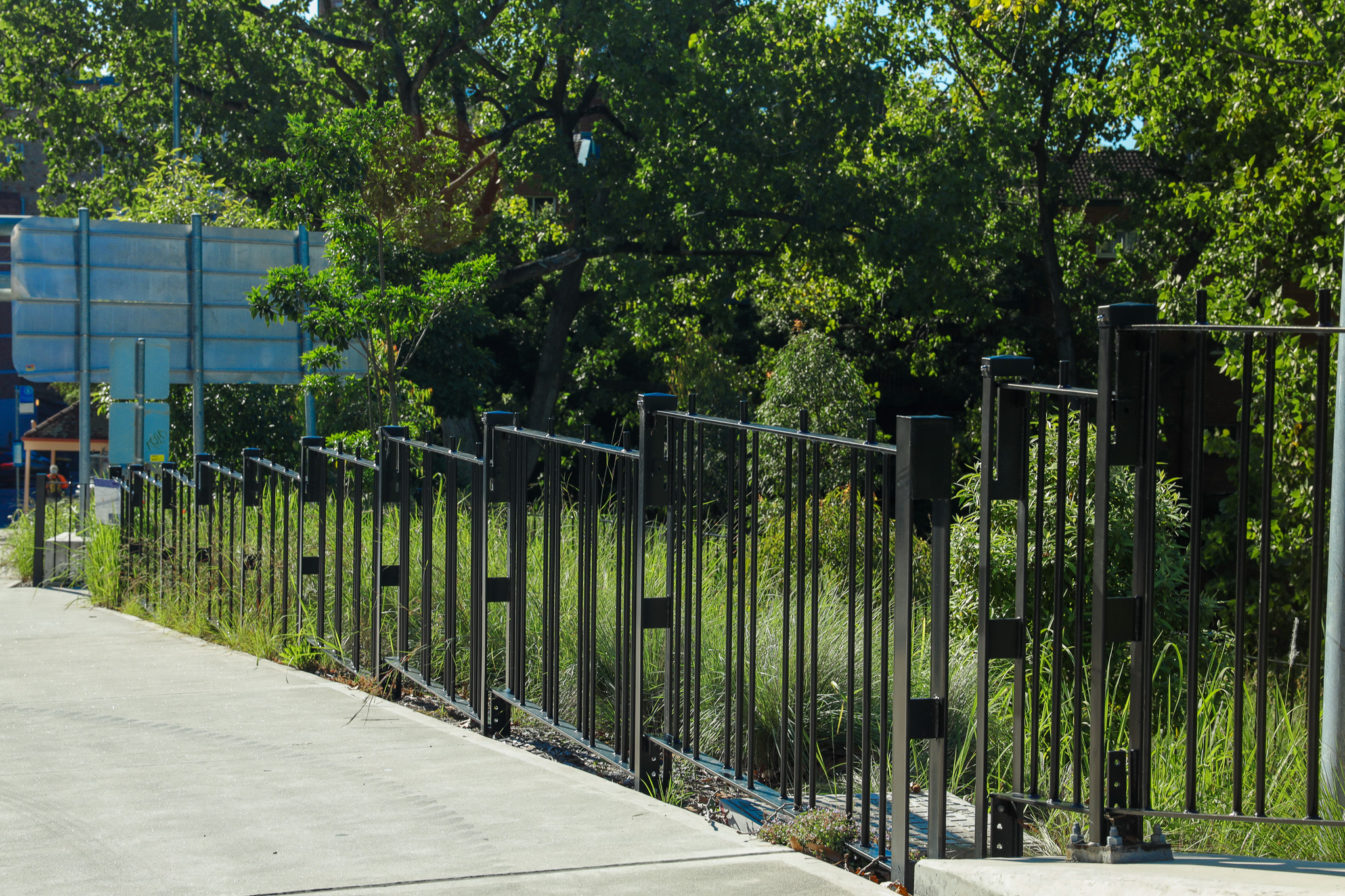
Queensland road safety audit frameworks, aligned closely with Austroads guidance, reinforce an important reality:
Compliance alone does not guarantee safety.
When reviewing pedestrian fencing infrastructure, road safety auditors should assess whether fencing improves actual behavioural outcomes rather than simply meeting specification drawings. Critical audit questions include:
- Does the fencing align with genuine pedestrian desire lines?
- Will pedestrians naturally follow the intended route?
- Are sightlines obstructed for drivers or pedestrians?
- Does the fencing integrate effectively with crossings and refuges?
- Could the installation create trapping risks or unsafe waiting areas?
The most effective pedestrian safety barriers are those designed around real-world pedestrian behaviour patterns, anticipating how people naturally move through spaces and subtly guiding them toward safer, intended routes rather than forcing compliance through rigid or poorly aligned layouts.
Austroads Perspective on Pedestrian Safety
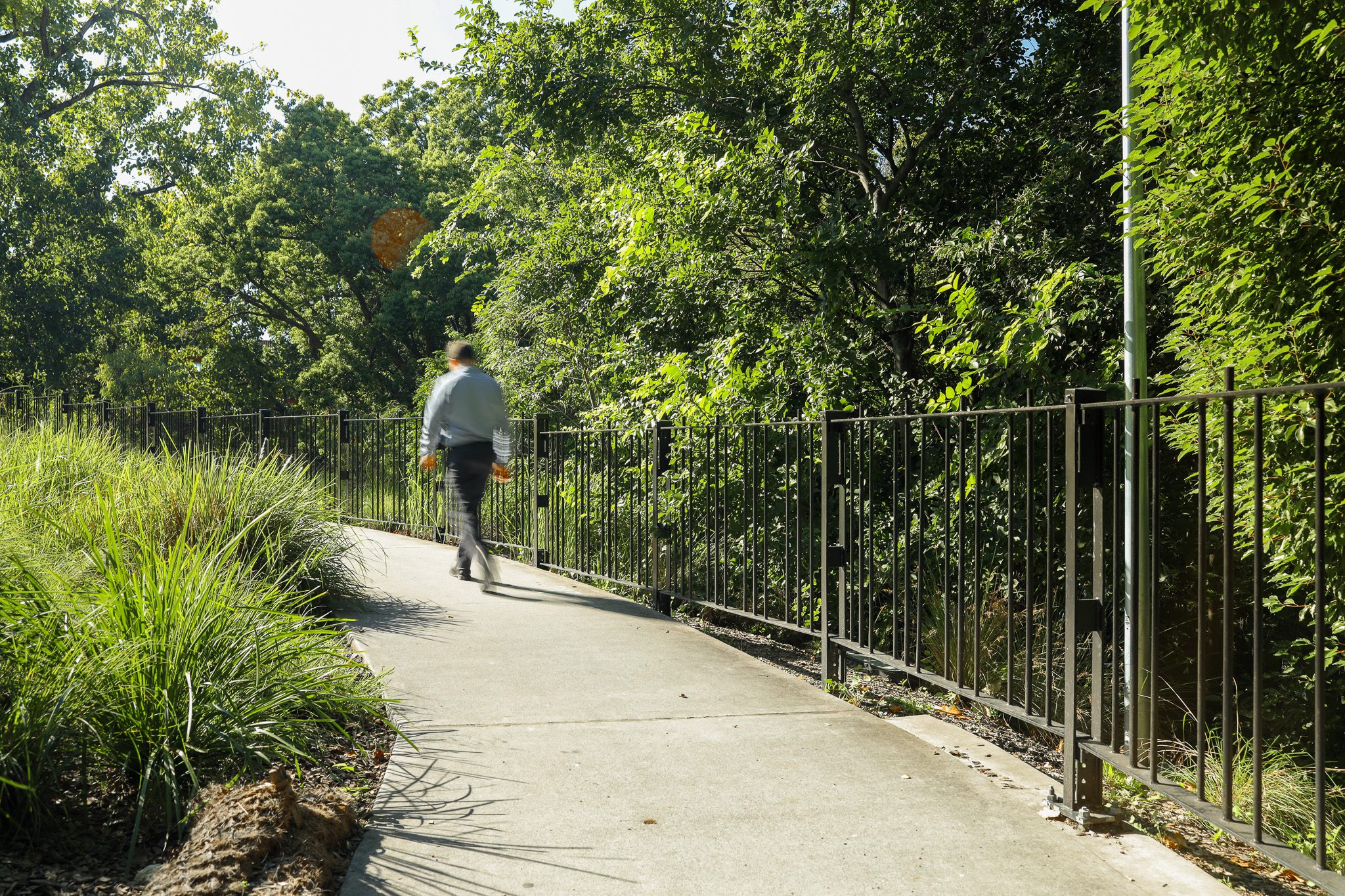
Austroads guidance consistently highlights the importance of reducing pedestrian exposure to traffic conflict points. It also emphasises designing infrastructure that minimises unnecessary road crossings, shortens time spent in live traffic environments, and prioritises controlled, well-defined crossing locations.
Key principles include:
- Reducing exposure time lowers crash risk
- Controlled crossings improve pedestrian safety outcomes
- Guided pedestrian movement supports safer road-user interaction
- Median refuges are critical in higher-speed environments
Properly implemented pedestrian barrier systems support these objectives by:
- Channelling pedestrians toward safer crossing points
- Reducing unpredictable crossing behaviour
- Supporting staged crossing movements
- Improving separation from live traffic
These outcomes are especially important in dense urban corridors and state-controlled road environments where pedestrian volumes are high, traffic conditions are more complex, and the margin for error between vehicles and pedestrians is significantly reduced.
QLD Pedestrian Fencing in Practice
In practical project delivery, pedestrian fencing performs best when incorporated early during planning and design stages, as this allows it to be properly aligned with pedestrian desire lines, crossing infrastructure, and site constraints before construction decisions are locked in.
Common applications include:
- State-controlled arterial roads
- School frontages
- Urban transport interchanges
- High-foot-traffic corridors
- Median-controlled crossing environments
When fencing decisions are delayed until later project stages, installations often become reactive rather than strategic. This can lead to redesign requirements, constructability complications, increased project costs, and audit concerns.
Early coordination between designers, contractors, and road safety auditors helps ensure fencing integrates properly with broader infrastructure objectives.
Ingal Pedestrian Fence vs Modern Alternatives
The Ingal Pedestrian Fence remains one of the most recognised systems across Australian transport infrastructure projects and has been widely adopted throughout state road networks. However, many modern projects now require more flexible and proactive approaches to pedestrian fencing delivery.
Current infrastructure demands increasingly prioritise:
- Faster installation processes
- Improved integration with urban design outcomes
- Greater specification support during early design phases
- Flexible configurations for complex environments
- Improved coordination across multidisciplinary teams
As project complexity increases, many contractors and designers are seeking suppliers capable of providing both compliant products and practical project support.
Street-Guard®: A Proactive Approach to TMR Pedestrian Fencing
Guard-R Group’s Street-Guard® system has been developed specifically for projects requiring practical, compliant, and constructable TMR pedestrian fencing solutions. It focuses on meeting regulatory requirements while also addressing real-world site conditions, improving installation efficiency, and ensuring smooth integration with broader transport and pedestrian safety infrastructure.
Rather than approaching fencing as a basic commodity product, Guard-R focuses on helping project teams achieve safer real-world outcomes.
Early Design Support
Guard-R works closely with:
- Road designers
- Civil engineers
- Road safety auditors
- Infrastructure contractors
This early collaboration ensures that pedestrian fencing solutions align with:
- Pedestrian desire lines
- Crossing infrastructure
- Site constraints
- Relevant TMR fencing requirements
Audit-Ready Documentation
Project teams are also supported with:
- Drawings and technical details
- Specification wording assistance
- Compliance-aligned documentation
This can help streamline project approvals and reduce design coordination issues.
Constructability Focus
Street-Guard® systems are also designed with practical installation considerations in mind, supporting:
- Efficient installation
- Reduced onsite delays
- Simplified coordination across contractors
- Better project delivery outcomes

Why QLD Projects Need a Smarter Approach to Pedestrian Fencing
For infrastructure teams delivering road safety fencing QLD projects, the consequences of poor fencing decisions can be significant, particularly when issues are only identified late in design or during construction, leading to safety risks and costly project adjustments.
Potential impacts include:
- Increased pedestrian exposure to traffic
- Road safety audit failures
- Costly redesign requirements
- Construction delays
- Higher long-term maintenance costs
For road safety auditors and project stakeholders, the key question should always be:
Does this fencing improve real-world safety outcomes?
Not simply:
Does it comply with the drawing?
Because in practice, the effectiveness of pedestrian fencing is ultimately measured on-site, where pedestrian behaviour, traffic conditions, and visibility all determine whether the design actually performs as intended. Getting this balance right is what turns a compliant installation into a genuinely safer road environment.
CONCLUSION: Pedestrian Fencing is a Safety System, Not Just Infrastructure
QLD pedestrian fencing is a critical part of the road safety toolkit, helping manage pedestrian movement, reduce conflict points, and improve separation between people and live traffic – but only when it is properly designed, correctly positioned, and integrated with surrounding infrastructure to reflect real-world conditions.
For road safety auditors, TMR project teams, civil engineers, contractors, and designers, the key priorities should be:
- Aligning fencing with pedestrian behaviour
- Integrating fencing with safe crossing infrastructure
- Delivering compliance alongside practical performance
With the right planning approach and properly integrated systems, pedestrian fencing systems become far more than physical barriers. They become controlled safety solutions that reduce risk, improve pedestrian behaviour, and support safer transport environments across the state.
To learn more about Guard-R Group’s pedestrian fencing systems and project support capabilities, visit the Guard-R Group website.