Multi-level car parks are no longer simple parking structures. They are complex transport assets that must balance structural performance, safety, durability, urban integration, and whole-of-life cost. For engineers, councils, and developers, the design challenge is not only about accommodating vehicles. It is also about ensuring reliable protection at every elevated edge.
Standards such as Transport for NSW’s TS 00174 Car Parks Standard reinforce this responsibility. The guidance makes it clear that vehicle containment and edge protection are fundamental safety requirements within modern parking infrastructure.
At the centre of this requirement are properly engineered carpark guardrails and impact-rated carpark barriers. These systems are critical to elevated carpark safety, helping prevent vehicles from breaching the edge of a structure. In multi-storey environments, selecting the right containment system is not simply a design preference. It is a key risk control that protects users, assets, and long-term operational outcomes.
This article outlines the key safety considerations in multi-level car park design and explains why impact-rated guardrail systems are critical for effective vehicle containment.
The Risk Profile of Multi-Level Car Parks
Multi-storey parking structures present a very different risk environment than at-grade parking areas. Vehicles operate close to elevated deck edges, which means even minor driver errors can have more serious consequences. A loss of vehicle control near the perimeter of a structure can quickly become a safety and structural issue. As a result, elevated decks are among the high-risk carpark locations in the built environment. Key risks include:
- Severe Injury or Fatality
If a vehicle breaches the edge of a deck, the consequences can be severe. Properly engineered carpark barriers and carpark guardrails are essential for maintaining elevated carpark safety in these high-risk carpark locations. - Vehicle Overrun at Deck Edges
Limited margin for error near deck perimeters means vehicles can overrun edges without effective carpark barriers or carpark guardrails. - Structural Damage from Vehicle Impact
Even low-speed impacts can damage façade elements and perimeter infrastructure if containment systems cannot absorb vehicle loads.
For engineers and designers, carpark guardrails and carpark barriers must be treated as engineered safety systems rather than visual guidance elements.
Open-Deck Design Increases the Importance of Guardrails
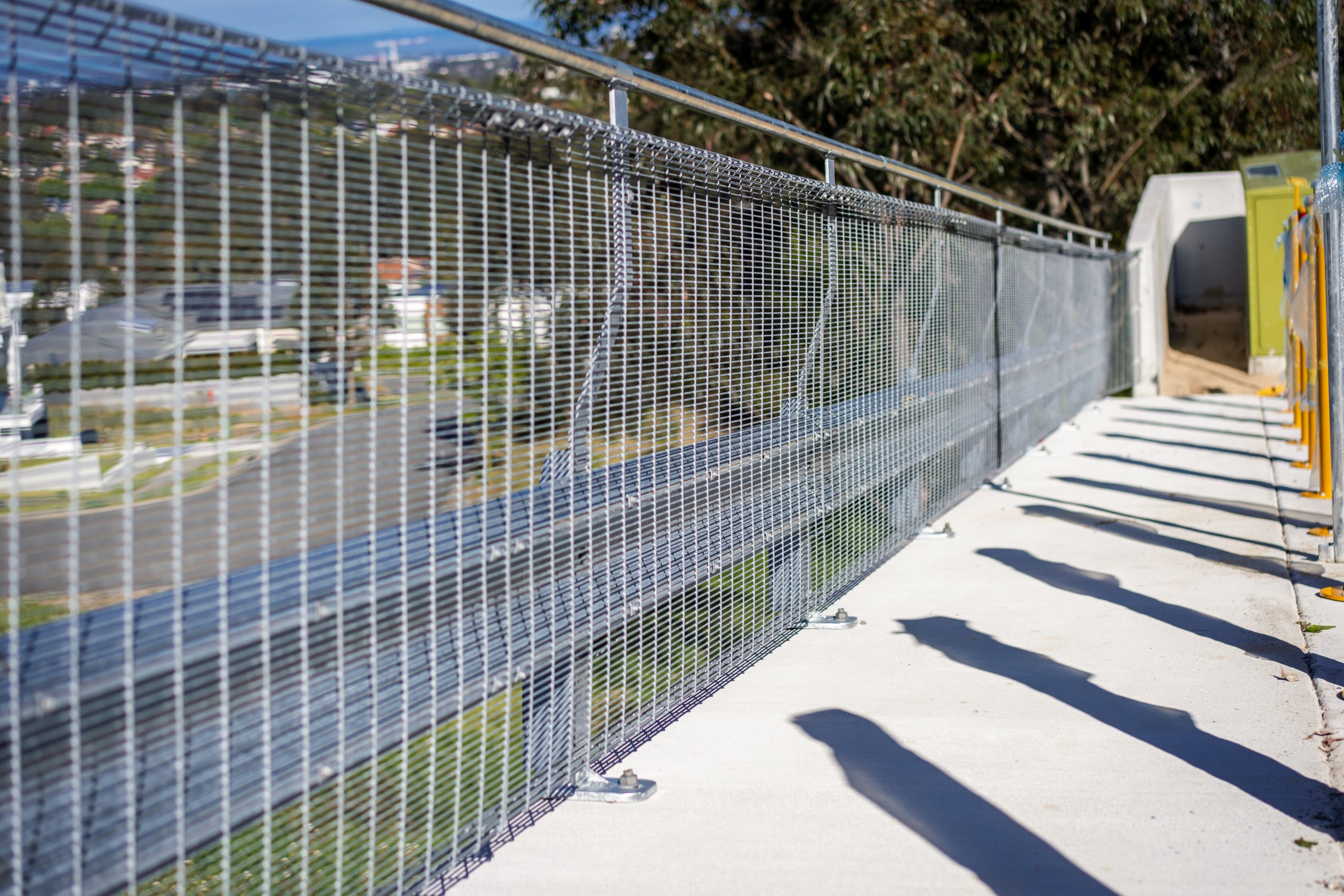
Open-deck parking structures are increasingly common across Australian urban developments. These designs are encouraged in many planning frameworks because they support natural ventilation, improve passive surveillance, and reduce reliance on mechanical ventilation systems.
However, the open nature of these structures also changes the containment strategy.
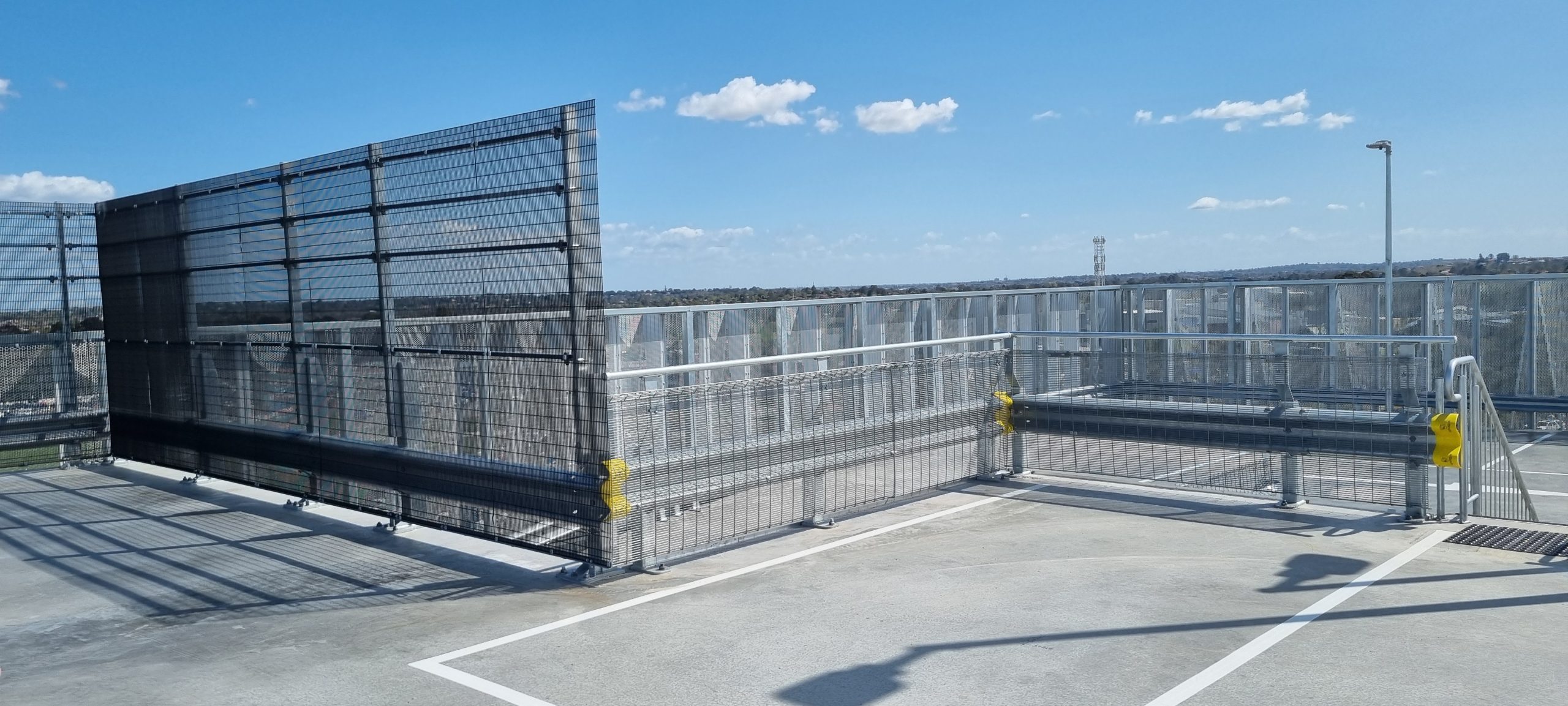
Without solid façade walls or heavy perimeter construction, the guardrail system often becomes the primary barrier preventing vehicle overrun. This increases the importance of well-designed carpark guardrails and engineered carpark barriers that can manage accidental impact forces.
Standards such as AS/NZS 2890.1 and relevant transport authority guidelines emphasise that these systems must be designed to accommodate vehicle interaction. For multi-storey environments, the guardrail is no longer a secondary element. It plays a direct role in maintaining elevated carpark safety, particularly in high-risk carpark locations such as perimeter parking bays, ramps, and transitions between levels.
Selecting the correct containment system, therefore, becomes a core part of the structural safety strategy for modern parking facilities.
Designing for Impact, Not Just Compliance
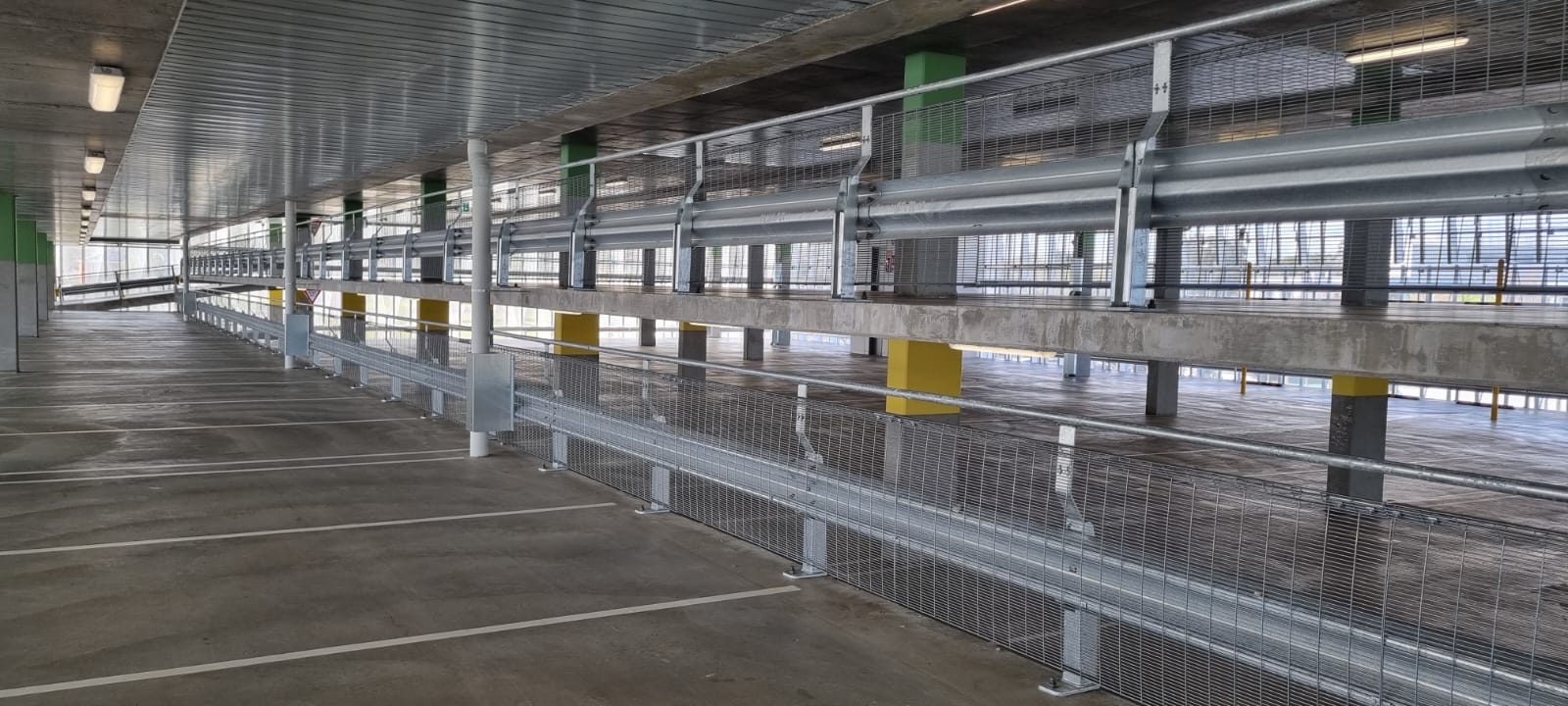
One of the most common design oversights in parking infrastructure is treating barriers as purely regulatory elements. In reality, vehicle interactions within car parks occur more frequently than many stakeholders expect.
Low-speed impacts can occur due to steering misjudgement, pedal confusion, driver fatigue, or limited visibility in tight circulation areas. While these incidents may appear minor, they still require containment systems that can absorb and redirect vehicle loads.
A compliant containment system should therefore be designed to:
- Absorb and Distribute Impact Forces
Properly engineered carpark guardrails must be capable of managing vehicle loads by absorbing and spreading impact forces across the barrier system and its mounting points. - Prevent Vehicle Override
Well-designed carpark barriers help stop vehicles from riding over or breaching the edge of the structure, which is critical for maintaining elevated carpark safety. - Protect Pedestrians and Adjacent Assets
In many high-risk carpark locations, pedestrians, building façades, and service infrastructure may be located close to vehicle circulation areas. Guardrail systems provide an important layer of protection. - Remain Serviceable After Minor Impacts
In busy parking environments, minor collisions can occur. Durable carpark guardrails should maintain structural integrity and remain functional even after low-speed impacts.
By designing for realistic impact scenarios rather than minimum compliance alone, engineers can ensure containment systems continue to perform effectively over the life of the asset.
Why Kwik-Guard Guardrail Is Well-Suited to Multi-Level Car Parks
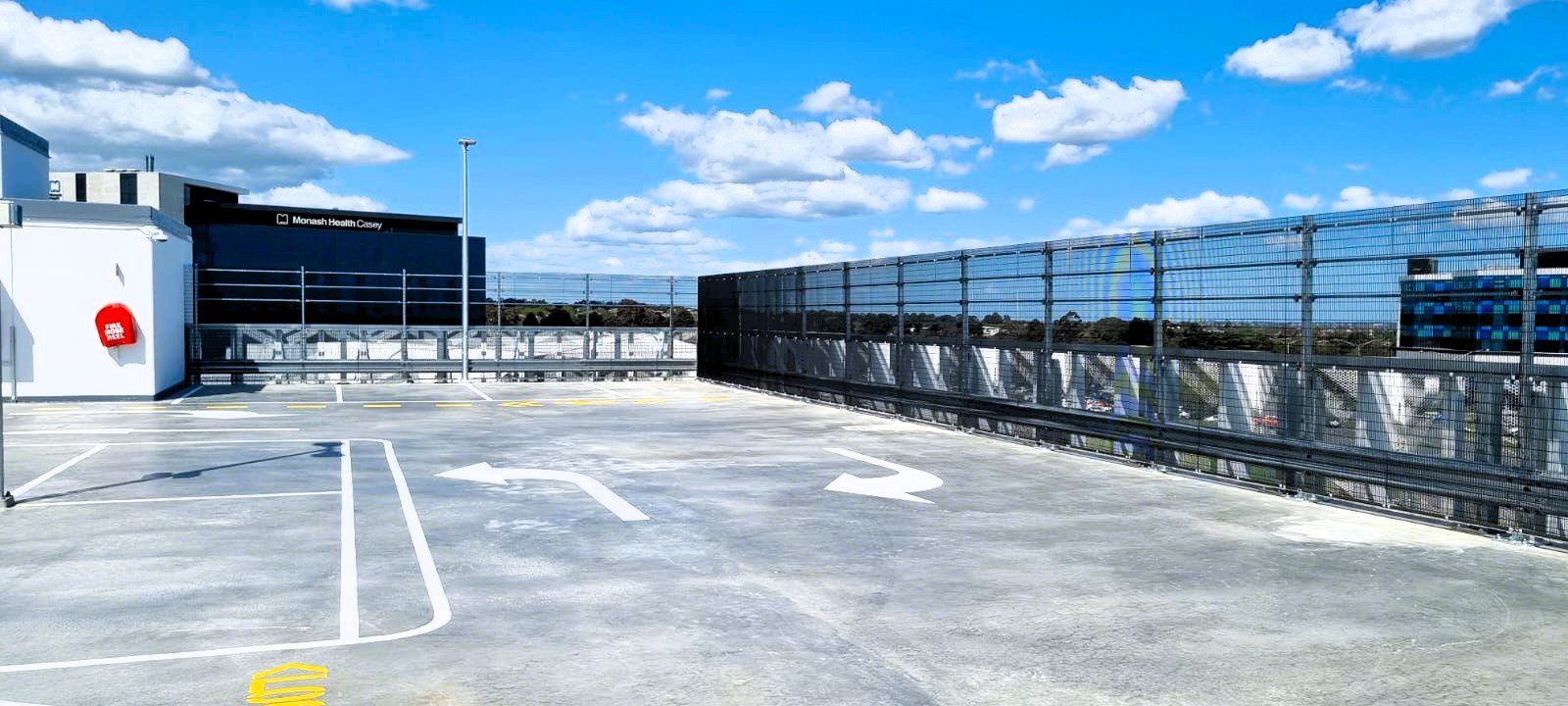
Kwik-Guard Guardrail has been developed specifically for environments where vehicle containment, durability, and constructability are critical. From a TfNSW and RMS-aligned perspective, it meets the performance intent of TS 00174, which treats carpark guardrails as a safety barrier system rather than a decorative element.
- Purpose-Designed for Vehicle Impact
Kwik-Guard is engineered for vehicle interaction, not pedestrian separation. In high-risk carpark locations, it functions as a genuine impact-rated barrier, supporting elevated carpark safety in compliance with TS 00174 requirements. - Modular and Efficient Installation
Modular design enables fast installation on suspended slabs, easy coordination with post-tensioned decks, and simple replacement of damaged sections. This aligns with TfNSW guidance on modular infrastructure to reduce construction time and whole-of-life costs. - Durability and Whole-of-Life Performance
Exposed to exhaust gases, moisture, UV, and frequent vehicle contact, carpark barriers require durable finishes. Kwik-Guard’s hot-dip galvanised construction satisfies TS 00174 guidance on long-lasting, low-maintenance materials. - Integration with Wheel Stops and Circulation Design
The system integrates with concrete wheel stops, parking bay layouts, and AS/NZS 2890.1 aisle geometry, creating a layered safety approach that mitigates risk in high-risk carpark locations.
Where impact-rated containment is required, purpose-built systems such as Guard-R Group’s carpark barriers provide a more reliable solution than basic rails designed only for visual separation.
Supporting Future-Proofed Car Park Design

A key focus of TS 00174 is planning for the future. Design guidance highlights the need to account for evolving vehicle sizes, the integration of electric vehicle infrastructure, and the potential for adaptive reuse of parking structures. The standard also promotes modular systems and flexible reconfiguration to maintain long-term compliance and operational efficiency.
A modular guardrail system like Kwik-Guard facilitates:
- Reconfiguration During Staged Expansions
Sections of carpark guardrails can be adjusted as the facility grows or changes, maintaining elevated carpark safety throughout the process. - Partial Upgrades Without Major Demolition
Individual carpark barriers can be replaced or upgraded without extensive structural works, minimising disruption to operations. - Long-Term Compliance as Standards Evolve
Modular systems help asset owners maintain alignment with evolving TS 00174 requirements, ensuring continued performance in high-risk carpark locations.
This approach enables designers and operators to plan for future changes while maintaining effective, impact-rated carpark barriers and reliable safety outcomes over the life of the structure.
Guardrails as a Safety System, not a Detail
Within a multi-storey parking structure, barrier systems play a fundamental role in risk management. Properly designed carpark guardrails are not decorative features or secondary additions to the structure.
They form part of the primary containment strategy that protects users, vehicles, and surrounding infrastructure by absorbing and redirecting impact forces, preventing vehicles from breaching deck edges, and minimising damage to structural components and adjacent assets. This ensures elevated carpark safety is maintained even in high-risk carpark locations where vehicle circulation occurs close to pedestrian zones or perimeter drops.
When engineers treat carpark barriers as engineered safety systems, the result is a more robust approach to elevated carpark safety. This is especially important in high-risk carpark locations where vehicle interaction with the perimeter of the structure is a realistic possibility.
A clear understanding of impact performance, installation quality, and durability helps ensure the barrier system continues to function effectively throughout the life of the asset.
Final Thoughts & Conclusion
Effective multi-storey car park design relies on understanding vehicle behaviour in confined circulation areas. Even low-speed impacts can pose serious risks at elevated edges. Specifying impact-rated carpark barriers and engineered carpark guardrails ensures strong elevated carpark safety, protects infrastructure, and reduces risk in high-risk carpark locations. Engineers, councils, and asset owners should prioritise performance over appearance.
Explore Guard-R Group’s range of carpark safety solutions to implement safer, resilient multi-level parking solutions.
Discover Guard-R Groups’s impact-rated carpark safety solutions to deliver safer, resilient multi-level car parks that keep vehicles, pedestrians, and infrastructure protected.
REQUEST A CONSULTATION: Plan Your Car Park the Right Way from Day One
Ensure your multi-level car park is designed for safety, compliance, and long-term performance. Our team provides project-specific guidance on vehicle guardrail systems, helping you avoid design clashes, reduce rework, and meet Australian Standards from the outset